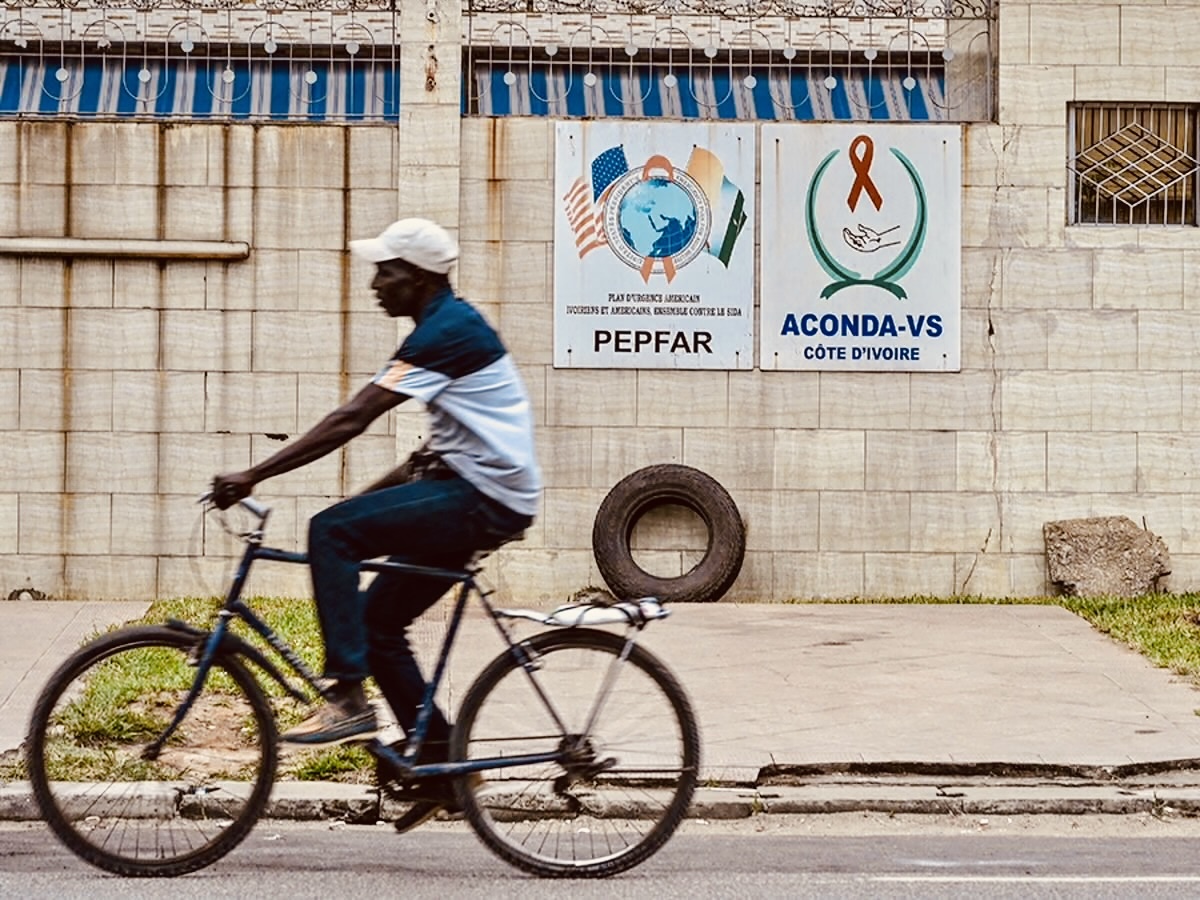
As World AIDS Day approaches, many Americans and policymakers have lost sight of one of the most successful diplomatic and global health initiatives in history. In 2003, President George W. Bush launched the United States President’s Emergency Plan for AIDS Relief to address the society-destabilizing challenges of the HIV/AIDS epidemic. To date, the U.S. has invested more than $130 billion to treat and prevent HIV across 50 developing nations. From its start, the initiative has benefitted from broad bipartisan support in Congress. The success of the global health program provides America with a tremendous amount of goodwill abroad, especially in sub-Saharan Africa. But how should Americans feel about PEPFAR and its purpose more than 20 years after the initiative began?
The problem is twofold.
First, unless you are a policymaker with a global health portfolio or an aid worker deployed to a PEPFAR-recipient nation, the success of the initiative has little to no impact on your daily life. Many Americans are unaware of PEPFAR’s many major accomplishments, which include saving more than 25 million lives and ensuring 5.5 million babies were born HIV-free.
In 2023 alone, more than 71 million people received HIV testing services; 20 million had access to antiretroviral treatments; more than 7 million orphaned children and their caregivers received vital health services. Americans should take pride in the success of the program and their generosity, but the average citizen remains far removed from foreign policy decision-making, and even more so from foreign aid programs.
Americans support PEPFAR, but it is not a vote-driving issue, meaning efforts to increase or decrease funding for the program will not animate the average citizen to vote for or against a party or politician.
For example, the Trump administration decided in its America First Global Health Strategy to revamp how PEPFAR works. The strategy document details how the administration is aiming to transform a culture of dependency to one more focused on host nation ownership.
The Trump administration believes the so-called “culture of dependency” makes PEPFAR-recipient nations too dependent on American foreign assistance, undermining those nations from taking the lead in developing their broader healthcare infrastructure. The counterpoint is that because of PEPFAR, recipient nations have more resources to develop their healthcare system since their primary health concern, managing an HIV epidemic, has been largely funded by the most successful foreign aid program in world history.
The second problem is how PEPFAR, and global health diplomacy in general, fits
into broader foreign policy goals. Irrespective of the party in control of the White House, global health initiatives remain secondary concerns at best. While the COVID-19 pandemic showed how global health has the potential to envelop all foreign and domestic concerns, the norm is that day-to-day global health initiatives get put on the back burner and are the remit of those focused on strengthening the soft power of the United States. And however important those programs are, they pale in comparison to the hard power realities such as economic utility and military dominance that dictate most of international relations.
What does this all mean for PEPFAR?
The United States wants to leverage its comparative advantage in global health diplomacy in the geopolitical competition with China. As long as PEPFAR funding remains relatively unchanged, then recipient nations could expect the same clinical successes they have enjoyed for the last two-plus decades. But American decisionmakers should not expect to wield PEPFAR as a weapon for dislodging China from Africa. Global health assistance is no substitute for no-strings-attached economic development, and that is what China promises.
What matters is that China is the largest trading partner for more than 120 nations, including most PEPFAR countries. Many PEPFAR-recipient countries are enmeshed with China economically, with governments and populations that are not so grateful to the United States for lifesaving HIV treatments that they will forego Chinese foreign direct investment because America sounds the alarm on the risks of getting too close with its primary adversary. The way the world works does not mean that the United States should shutter PEPFAR or make unreasonable demands of recipient nations. Americans and policymakers should value PEPFAR as a global public good in itself and not as an initiative that will sway votes in international bodies.
John Arcano is Senior Manager of Policy and Government Affairs at AIDS Healthcare Foundation.