
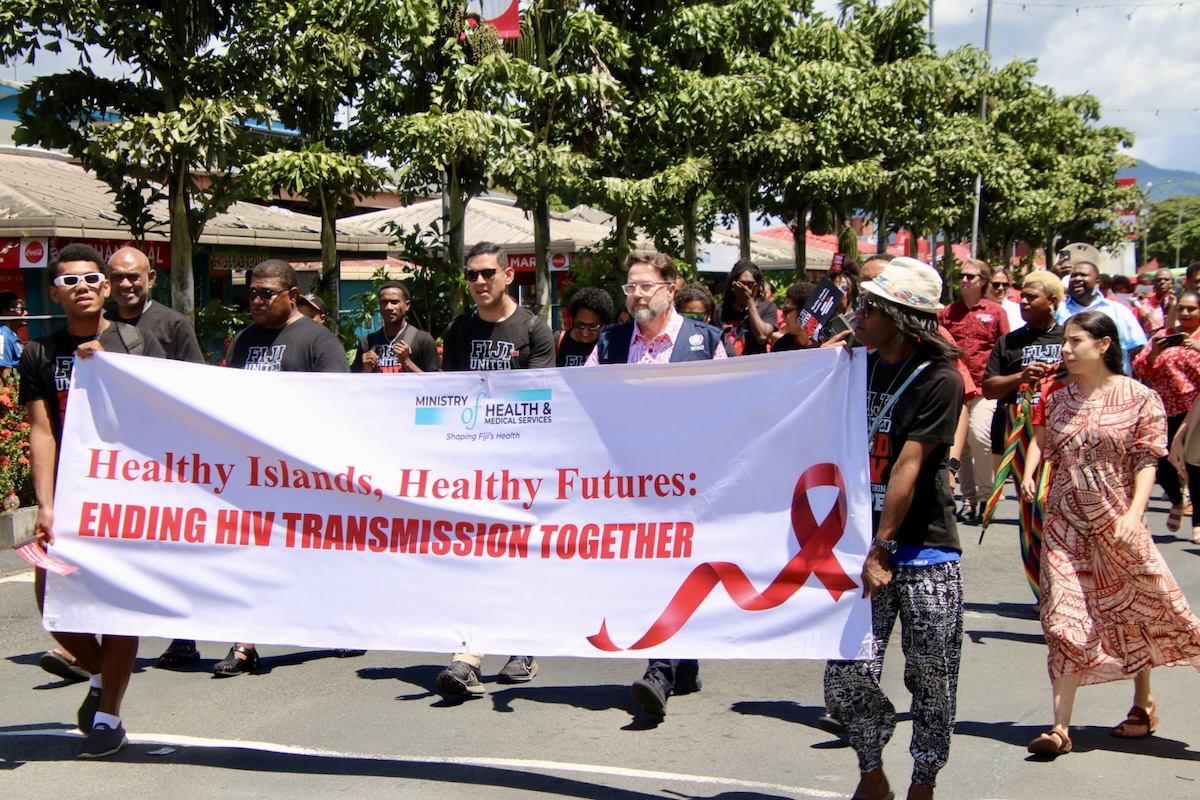
The world has made extraordinary progress against HIV. More than 32 million people are now receiving antiretroviral treatment, and AIDS-related deaths have fallen dramatically from their peak two decades ago. But progress is not the same thing as victory. On this World AIDS Day, Fiji offers a troubling reminder of what can happen when an HIV epidemic regains momentum.
The Pacific island nation formally declared HIV a national crisis in September after experiencing one of the sharpest increases in new infections anywhere in the world. UNAIDS estimates that new infections increased twelvefold between 2010 and 2025. About 9,100 people were living with HIV in Fiji last year, but only 39% knew their status and just 22% of the estimated total population living with HIV were accessing treatment.
Young people are being hit especially hard. Fiji recorded 2,016 new HIV diagnoses in 2025, and nearly one-third were among people ages 20 to 24. Among 67 pediatric diagnoses, 56 were attributed to mother-to-child transmission. Injection drug use has also become a major driver of the epidemic.
None of this is happening because public health has forgotten how to control HIV.
We know what works: testing, treatment, condoms, harm reduction, prevention options such as the drug called PrEP, community outreach and services people can reach without stigma or fear. The challenge is keeping those tools available, funded, and accessible.
Fiji is a particularly stark example, but the global numbers should prevent anyone from dismissing it as an isolated crisis. In 2025, 1.2 million people acquired HIV worldwide and 570,000 died from AIDS-related illnesses. Nearly nine million people living with HIV still lacked treatment.
At the same time, international funding for the HIV response has fallen sharply. Global resources remain billions of dollars below what UNAIDS estimates is needed annually to stay on track toward ending AIDS as a public-health threat.
AIDS Healthcare Foundation is preparing to begin work in Fiji in 2027, building on an existing presence in 11 countries across the Asia-Pacific region. The urgency is clear. Once infections begin rising rapidly, rebuilding testing, treatment, and prevention capacity becomes harder and more expensive than maintaining it in the first place.
Fiji shows how quickly HIV can accelerate again when proven interventions fail to keep pace with the epidemic. Governments, donors, and health organizations should protect the systems that already work and move quickly when the data show infections heading in the wrong direction.
AIDS is not over. The evidence is already in front of us.
Denys Nazarov is the Director of Global Policy and Communication at AIDS Healthcare Foundation. He has been with AHF for more than 17 years.