



Xiao Mianbao, commonly known as “Little Bread”, is a medical social worker with Changsha First Hospital, an AHF partner facility, and a volunteer with AHF China’s Food for Health program. His story is next in our “I Am AHF” series featuring remarkable staff, clients, and partners who are doing what’s right to save lives everyday.
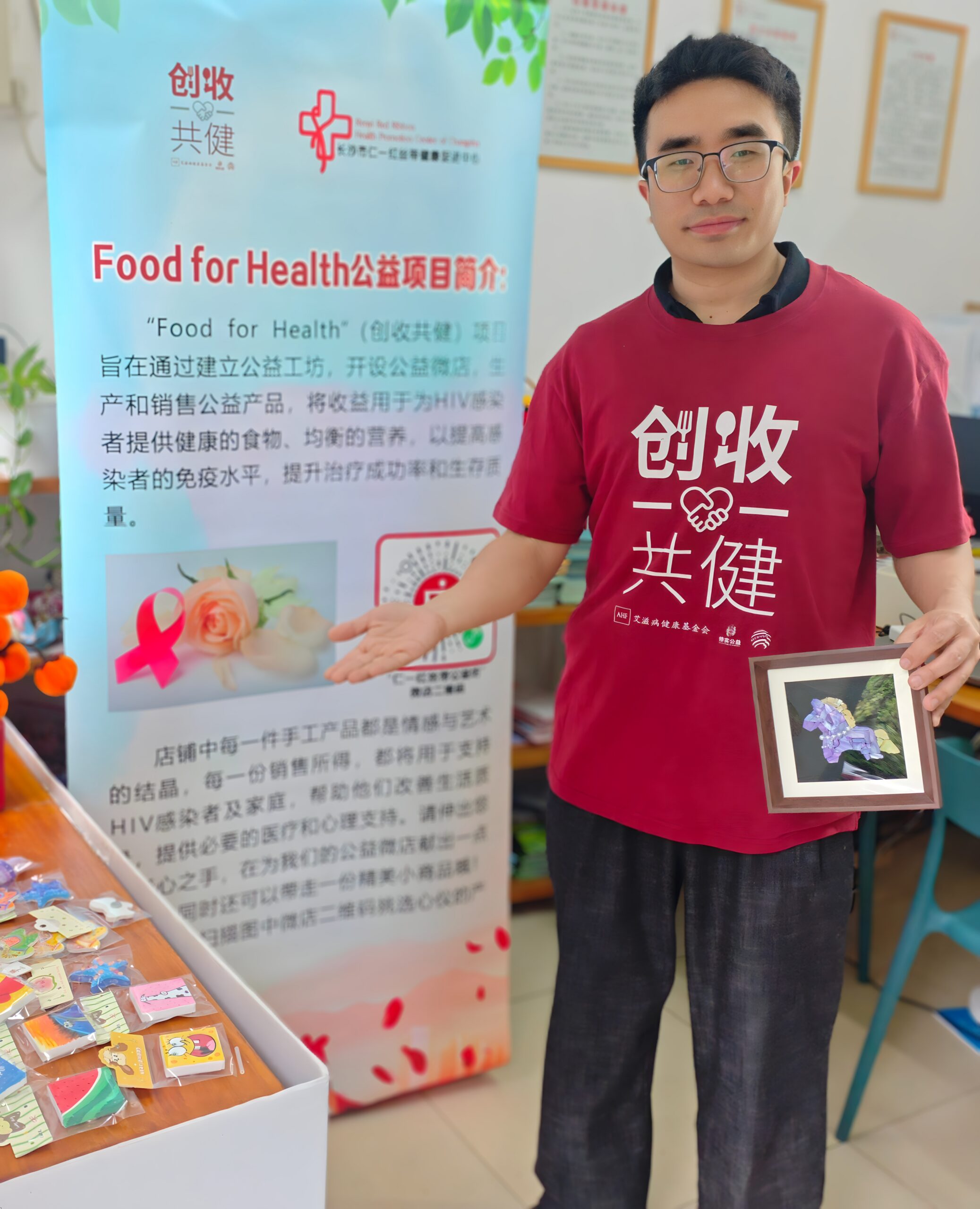
I am Xiao Mianbao, but everyone calls me “Little Bread.” I am a medical social worker at Changsha First Hospital, an AHF partner facility. The nickname comes from my lifelong love of bread, which even inspired the name of my first social media account. It was given to me in 2018, when I began volunteering at an HIV/AIDS organization. At that time, nicknames based on fruits and vegetables were common, and “Little Bread” became mine.
In my role as a medical social worker, I provide psychological care and social services to clients, developing tailored case management approaches for different individuals. Through this position at the hospital, I became aware of AHF and its public health programs, which later led me to begin volunteering with the organization in support of its Food for Health program.
As a core Food for Health volunteer, I help provide clients with income-generating skills like gardening and crafting, along with supporting a platform on WeChat to help sell their handmade goods. As part of the program, I help manage the WeChat online store through product promotion, sales events, visual design, and article writing.
In China, WeChat is more than a communication tool; it is a complete ecosystem where users can move seamlessly from reading HIV education content to purchasing items made by AHF clients. This integration allows the project to reach specific communities at low cost while helping clients build financial independence through their skills.
For most of my life, I never imagined working in public healthcare. I studied information technology in college and originally planned to move to a major city to pursue a high-paying tech career, which is a common goal among students in my field. However, my path moved toward public welfare, and this change altered the way I began to view HIV.
In the beginning, I had no concept of HIV/AIDS at all and assumed that people living with HIV must live in endless darkness and pain, be psychologically fragile, encounter obstacles everywhere, and need to be saved at every moment. After I entered public healthcare, this view was completely shattered. Through long-term case management, I discovered that people living with HIV have strong self-adjustment abilities and are not defined by their diagnosis.
Much of their anxiety stems not from the virus itself, but from limited social support and widespread discrimination, yet they remain resilient individuals striving to live full lives.
My upbringing also shaped my perspective. School was not easy, and I experienced discrimination and bullying that left me feeling isolated and powerless. That experience created a deep empathy for others on the margins, including people living with HIV, and directly influenced my professional path. I do not want to be a bystander; I want to use my skills and resources to create a safe space for those facing social exclusion. Because I understand that feeling, I approach my work with a strong sense of responsibility and professionalism.
I practice “practical empathy,” which means not simply feeling sadness for someone, but standing in their situation and helping solve real problems. If someone is hungry, I focus on connecting them to nutritious food. If someone faces discrimination, I help amplify their story or create educational content so more people can understand. True empathy is solving tangible problems.
Supporting this work has taught me that medical care alone is not enough. Nutrition, livelihood, and social acceptance are equally important. I have learned that prejudice often limits opportunity, and that effective public welfare requires both compassion and professionalism.
I remain modest about my personal future, but I hope the Food for Health model can expand further and continue contributing to the broader goal of ending the AIDS epidemic. Through consistent work, I hope to continue building dignity and opportunity for marginalized communities.