
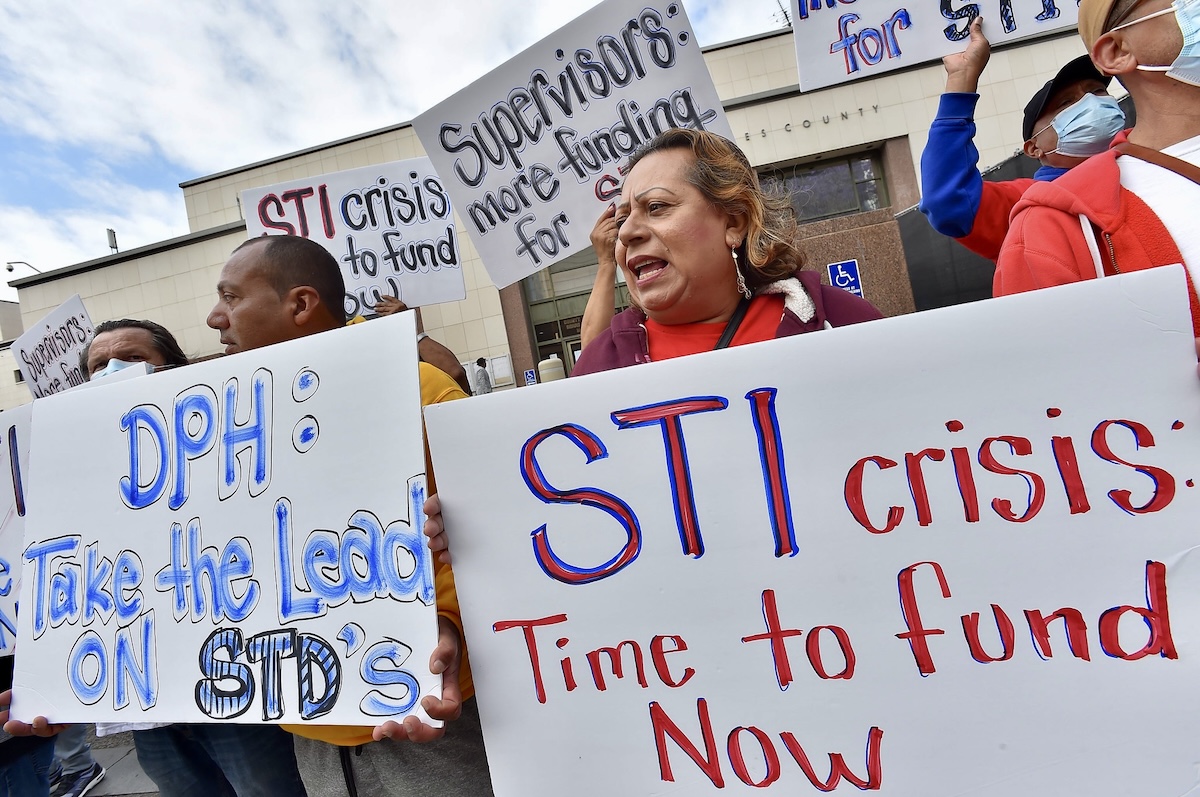
Rates of sexually transmitted infections (STIs) in the United States remain high, and robust public-health funding is essential to slow the STI epidemic. But the investment for a healthier country has been lacking.
While there has been a slight dip in STI rates over the past few years, we can’t get too comfortable. Overall cases of STIs are 13% higher than they were 10 years ago. With 2.2 million cases of STIs in the U.S., focused public-health work is needed to bring the rates down to where they were a decade ago — and even 20 years ago.
Some of the most effective ways to reduce STI rates include education, outreach, testing, prevention, and treatment.
These efforts can look like advertising campaigns, educational materials, community-embedded disease intervention specialists, and testing and outreach at community events and in mobile testing units. All of these methods rely on public-health funding from government.
One study found a discernible correlation between funding and rates of chlamydia and gonorrhea. In this study, for every 1% increase in annual funding for the prevention program at the Centers for Disease Control and Prevention, the rates of chlamydia and gonorrhea would decrease by 0.17% and 0.33%, respectively.
The study additionally found that the rates of reported STIs in a given year were more closely associated with funding from the previous year than the current year, indicating that sustained investment in prevention is needed to make a meaningful, long-term impact.
Unfortunately, public-health prevention dollars have been decreasing in recent years. Federal investments from the CDC have not increased since 2003; instead, they have seen a $21 million reduction in funds since then. STI rates can’t be significantly reduced without reinvigorated investment in prevention and testing.
The U.S. government must commit sustained funding to STI prevention to help reduce annual cases and protect public health — and to create a healthier America.
Lauren Natoli is the Director of Advocacy and Policy Research in the Public Health Division of AIDS Healthcare Foundation.