
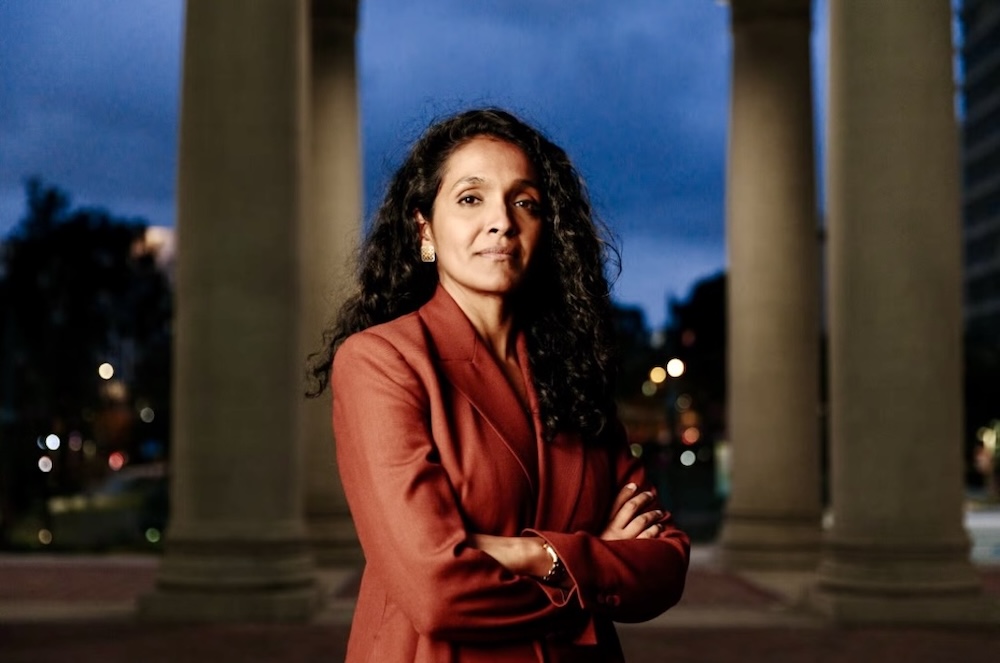
Nithya Raman will soon be the next mayor of Los Angeles, taking her oath of office in mid-December. On the campaign trail, she, like many Democrats this fall, made “affordability” one of her key issues. In a city where unfair, excessive rents are the norm, affordable housing must rank high on her to-do list. Housing Is A Human Right has some suggestions that will directly help the people who need it most: poor and moderate- and low-income residents.
The suggestions are actually part of a sensible concept called the “3 Ps”: protect tenants through strong renter rights, including rent stabilization; preserve existing affordable housing (such as rent-stabilized apartments), don’t quickly demolish it for more luxury housing that most people can’t afford; and produce moderate- and low-income housing and permanent homeless housing through such methods as the adaptive reuse of existing buildings and prefabricated housing.
Protect. Preserve. Produce.
Unlike the “trickle-down” housing agenda pushed by Big Real Estate, the 3 Ps directly and urgently help poor and moderate- and low-income renters, who have been hit the hardest by L.A.’s housing affordability and homelessness crises. We can’t emphasize that point enough. The 3 Ps help people right now. Trickle-down housing, which involves flooding the rental housing market with expensive luxury housing, takes decades to create affordable housing – and even that’s not guaranteed.
To protect tenants, Raman and her staff can immediately look into what renter rights are needed or should be improved. In fact, Raman should consult with housing justice activists and tenant unions who work on the front lines of the housing affordability and homelessness crises to hear what they have to say. Too often, politicians fail to talk to activists, who can give invaluable information about what’s happening on the street.
To take it one step further, similar to New York City Mayor Zohran Mamdani, Raman can appoint a veteran housing justice activist to be one of her key advisors on housing.
Raman can also get behind a push by the L.A. City Council to regulate algorithmic rent-fixing software. San Francisco, Berkeley, San Diego, and Santa Monica have already banned such technology, which, in the past, has been widely used by corporate landlords to collude and wildly inflate rents in cities across the United States. That’s what the RealPage scandal was all about, and that’s why cities throughout the nation started banning rent-fixing software. Los Angeles has been lagging behind, so Raman should tell the city council to quickly pass regulations.
In addition, Raman can put pressure on state politicians to reform or repeal the Costa-Hawkins Rental Housing Act, which created statewide rent-control restrictions in California. If Raman can make headway on changing that law, L.A., the most populated city in the state, will be able to update its rent-stabilization ordinance.
By the way, a group of top economists and two housing experts explained that rent control not only works, but is desperately needed to protect renters against Big Real Estate’s predatory business practices. The economists also found that anti-rent control arguments pushed by corporate landlords and YIMBY leaders are outdated and wrong, ignoring what’s actually happening on the street.
To preserve existing affordable housing, Raman should again put pressure on state politicians to reform or repeal the Ellis Act, which corporate landlords and developers have long abused to demolish rent-controlled buildings in California, including Los Angeles. It’s a major issue: Coalition for Economic Survival and the Anti-Eviction Mapping Project found that 31,824 rent-controlled units have been lost between 2001 and 2026 in L.A. due to the Ellis Act.
Let’s make something very clear. Big Real Estate, some politicians, and YIMBYs rarely, if ever, want to talk about the impact of the real estate industry’s predatory business practices on tenants. But ask any housing justice activist or tenant union member, and he or she will tell you that Big Real Estate’s constant grab for outsized profits off the backs of hard-working tenants is fueling the housing affordability crisis and, as a result, the homelessness crisis – if you can’t bring down rents, you won’t fix homelessness. So protecting tenants is desperately needed, and should be a part of any public debate about fixing the housing affordability crisis…
(Read the rest of the article at the Housing Is A Human Right website.)
Patrick Range McDonald is a veteran investigative reporter and the award-winning advocacy journalist for Housing Is A Human Right.