The first three words of the United States Constitution—“We the People”—represent one of the most powerful promises in American democracy. It speaks to the belief that government derives its authority from the people it serves. Yet, throughout our nation’s history, the full promise of those words has remained an unfinished journey.
When the Constitution was written, many people were excluded from the rights and protections we now associate with democracy. Through milestones in our country’s history, like that of the civil rights movement, generations of courageous individuals have fought to expand those rights, demanding that America live up to its founding ideals.
Today, that struggle continues. And nowhere is the urgency of that struggle more evident than in the fight for accessible, affordable healthcare; health equity; and the fundamental right of every person to live with dignity.
The reality of these issues can’t only be accessed by those with wealth, influence, or political power. Not just those who live in certain communities or have access to quality insurance. It must include people living with HIV/AIDS, working families struggling to afford prescription medications, seniors choosing between food and medical care, LGBTQ+ communities, communities of color, and every individual whose health and well-being depend on fair and equitable public policies.
With a foundational understanding that “We the People” must mean ALL the people, a reality that goes against the narrative being espoused by certain elected leaders, the We the People Coalition powered by AIDS Healthcare Foundation launched a modern-day movement to elevate the voice and power of the people.
The We the People Coalition recognizes that healthcare is not simply a political issue, but is a human right. The coalition recognizes that the fullness of a functioning democracy based on equity is at the basis of our struggle, and voting is one of the most powerful tools available to protect it.
As millions of individuals across this country engage in one of the most powerful tools we possess—voting—we cannot forget that every election, whether local, state, or national, has consequences for the health of our communities.
The individuals we elect make decisions about Medicaid expansion, prescription drug pricing, public health funding, access to HIV prevention and treatment, reproductive healthcare, and the resources available to community health centers and safety-net providers. These decisions have real consequences.
For someone living with HIV, access to affordable medications and consistent medical care can mean the difference between maintaining a healthy, productive life and facing preventable complications.
For a working parent, access to health insurance can determine whether a child receives timely medical attention.
For a senior living on a fixed income, the cost of prescription drugs can become an impossible financial burden.
And for communities already experiencing significant health disparities, public policy decisions can either help dismantle longstanding barriers or reinforce the very inequities that have denied generations the opportunity to thrive.
When we vote, we are not simply choosing candidates. We are helping to determine whose health matters, whose voices are heard, and whose lives are protected. That is why voters must look beyond political slogans and campaign promises. We must examine candidates’ records, priorities, and positions on the issues that directly affect our families and communities.
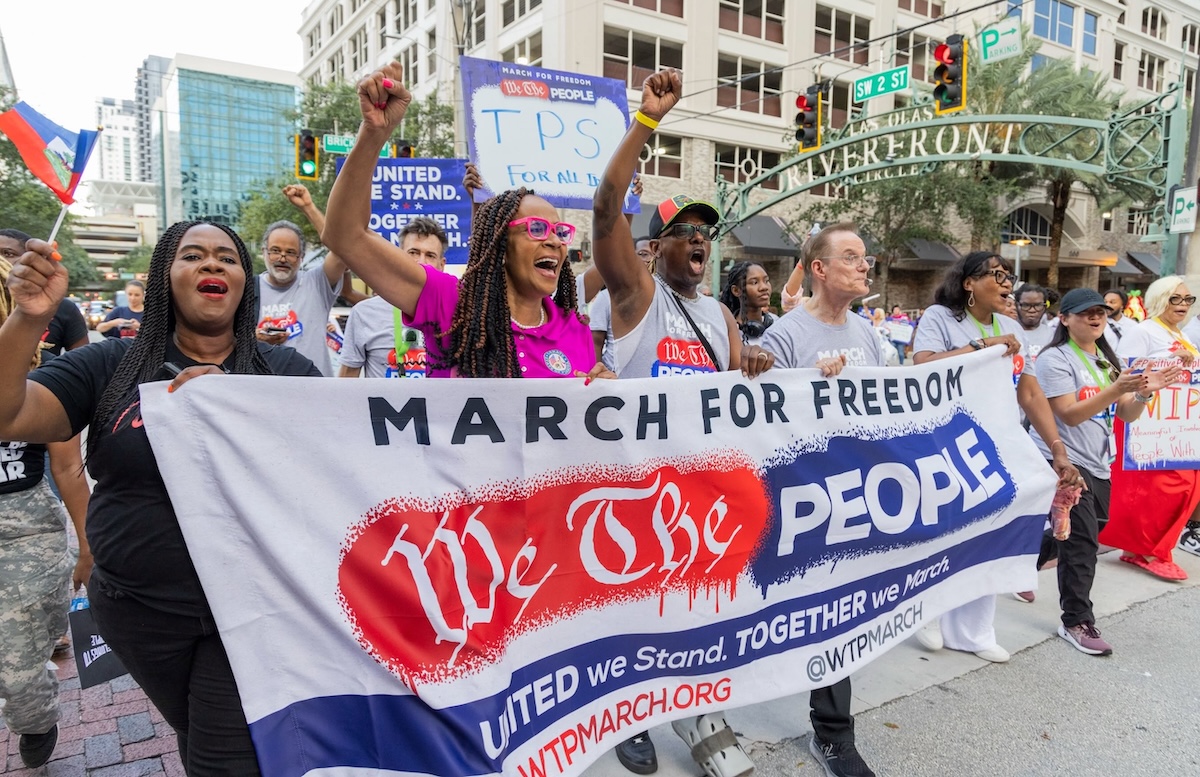
Over the Fourth of July weekend this past summer, thousands of Floridians, engaged with the We the People Coalition, emerged on the streets of Fort Lauderdale, marching to have their voices be heard. The momentum continued as coalition members and partners prepared to gather on the eve of Election Day for the 2026 midterm to elevate the power of their voice and their vote.
Modern history has shown us that marches have been a central action connected to transformative movements. However, the power of a march can’t be measured only by the number of people who gather. Its true impact is determined by what happens after the signs are lowered, the speeches conclude, and participants return to their communities.
To fully personify the impact and power of a march, it must become a movement. That means translating public awareness into community education, voter registration, sustained advocacy, and accountability for elected officials. It means helping people understand how decisions made in city halls, state legislatures, and Congress affect the affordability of their medications, the accessibility of their healthcare providers, and the future of their families. It means ensuring that people who have too often been left out of the democratic process understand that their participation matters.
As advocates and concerned citizens in communities across this nation move beyond Election Day, the We the People Coalition powered by AIDS Healthcare Foundation is a movement that provides an opportunity to connect these struggles and amplify a shared message: Democracy must work for everyone, and the health and well-being of our communities must remain central to that promise.
To learn more about the We the People Coalition and how you can get engaged, visit wtpmarch.org.
W. Imara Canady is Director of Communications and Community Engagement at AIDS Healthcare Foundation.