
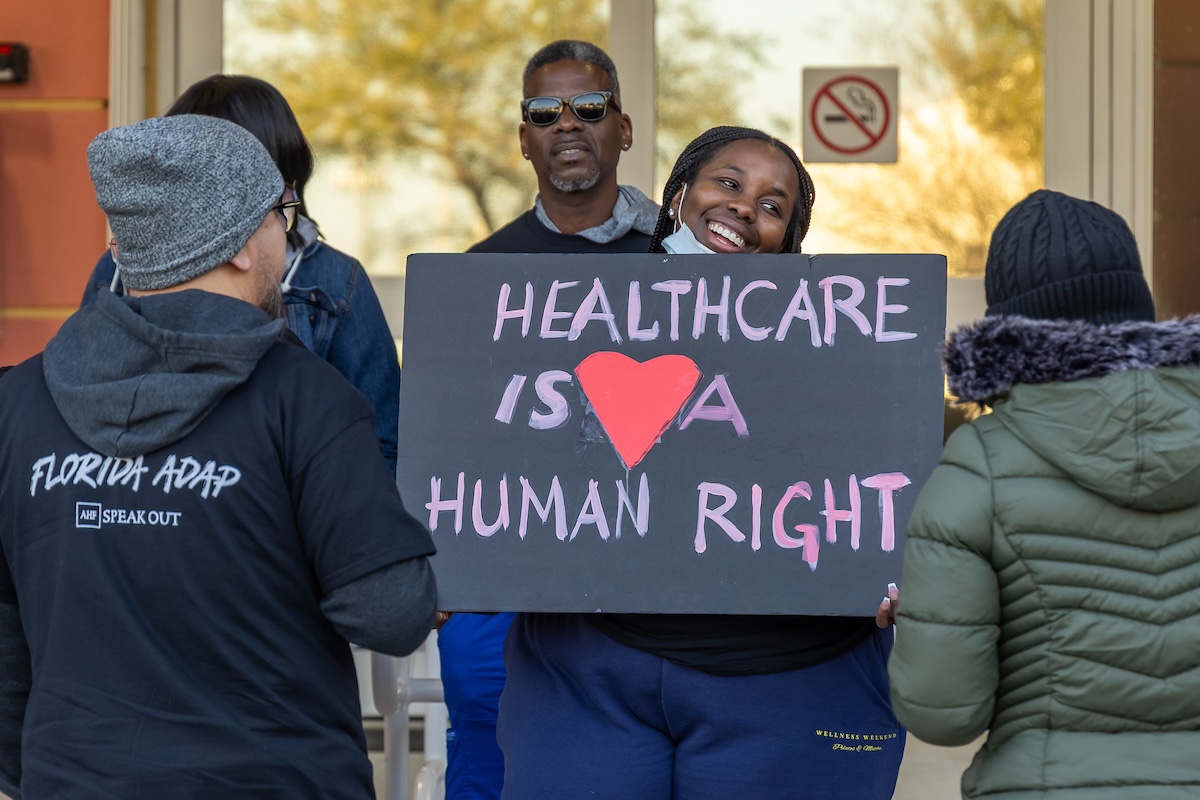



Most Americans probably aren’t aware of a very disturbing fact: HIV is a serious public health problem in the American South. That’s especially true in the “Deep South” (Alabama, Florida, Georgia, Louisiana, Mississippi, North Carolina, South Carolina, Tennessee, and Texas), which experiences a higher burden of HIV compared to other parts of the United States.
In fact, AIDSvu.org data show that the South accounted for 52% of all new HIV diagnoses in the country, despite only representing 38% of the U.S. population. And 14% of people living with HIV in the South were unaware of their HIV status.
In addition, the South had the lowest PrEP-to-Need Ratio in the country — 12 PrEP users for every new HIV diagnosis — indicating the greatest unmet need for HIV prevention services. (PrEP is an HIV prevention medication.)
The burning question is: Why is this happening in the American South?
The short answer: The social determinants of health.
Issues such as poverty, lack of health insurance coverage, housing instability, and systemic racism directly link to inequities in HIV prevention, testing, treatment, and care.
In most recent years, the South has continually had the highest poverty rate and the lowest median household income in the U.S., which is directly contributing to the region’s HIV burden.
AIDS Healthcare Foundation has responded to these issues, knowing that public health agencies must encompass the circle-of-health model in addressing the needs of at-risk populations, who often reside in under-resourced communities, and to meet community members where they’re at.
AHF has made this happen through a variety of people-centered engagements, including free, accessible prevention services like mobile testing units; wellness services connected to its non-profit thrift store, Out of the Closet; and through the creation of its subsidiaries, Food for Health and the Healthy Housing Foundation.
This community-centered approach connects people to affordable housing and healthy food options while also ensuring access to prevention and treatment services for HIV and sexually transmitted infections.
Make no mistake, AHF is committed to addressing the health inequities and social determinants of health that contribute to the South’s disproportionate HIV burden — and expanding access to HIV prevention, testing, and care services.
Imara Canady is Director of Communications & Community Engagement at AIDS Healthcare Foundation.