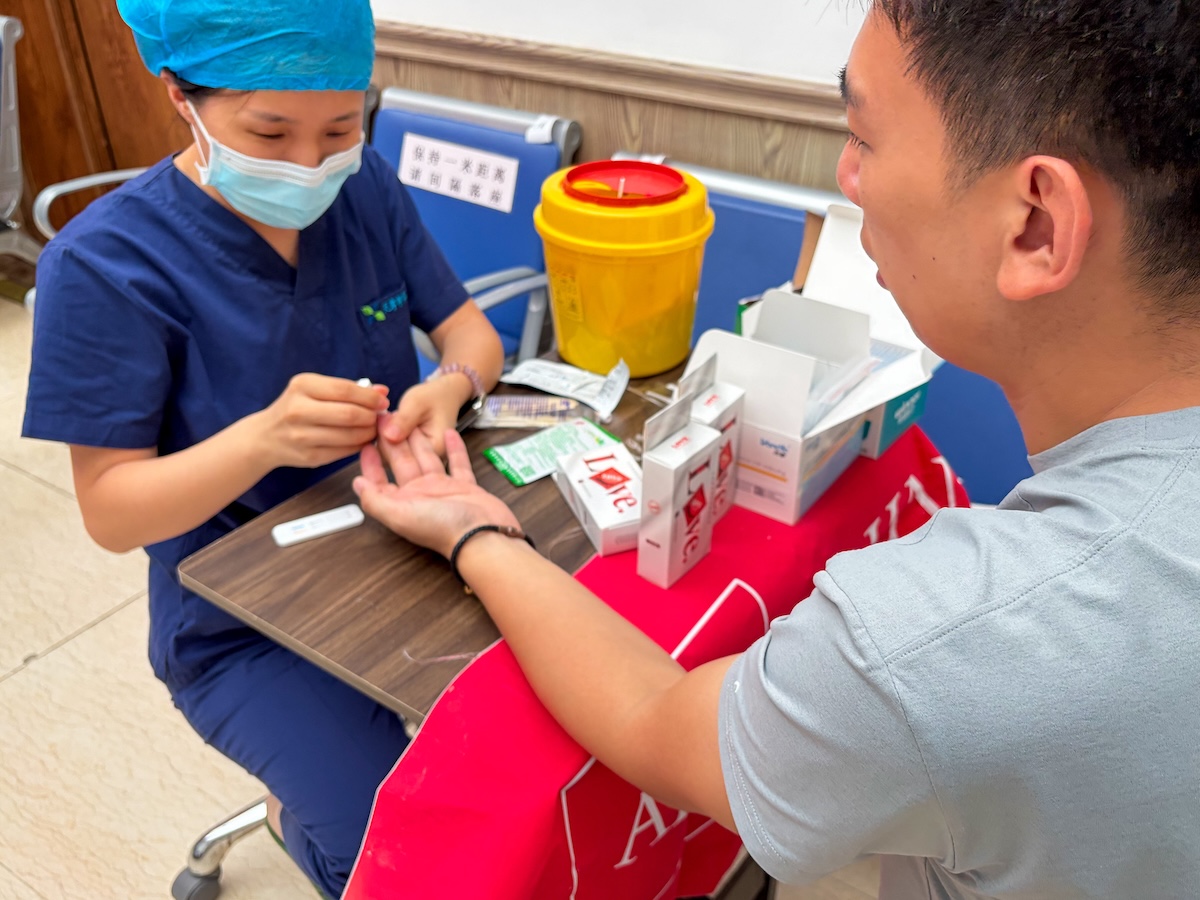
Among the most important tools in the fight against HIV is also one of the simplest: the rapid diagnostic test. It can tell someone their HIV status in minutes and open the door to everything that follows—from treatment and viral suppression to prevention choices that protect them and their partners. Without that first answer, the rest of the HIV response is much harder to reach.
That is why a new assessment from the International Planned Parenthood Federation (IPPF) deserves attention. Among 40 IPPF member associations surveyed across Africa, Asia, Europe, and the Americas, HIV rapid diagnostic tests were the commodity under greatest pressure. Seventeen reported low stocks, and five had complete stockouts. More than half could not reliably sustain HIV testing at the point of care.
An HIV positive test result can connect someone to treatment, leading eventually to viral suppression and dramatically reducing the risk of onward transmission to others. A negative result gives someone an opportunity to consider condoms, the HIV prevention medication called PrEP, and other ways to remain negative.
Close that door and everything behind it becomes harder to reach.
What makes the IPPF findings especially concerning is how little control many frontline organizations have over their supplies. Eighty-five percent of those surveyed receive HIV commodities through government systems. Only 15% import directly from other parts of the world, while nearly half lack authorization to import HIV products at all. When national or donor-supported supply chains falter, there may be nowhere else to go.
That matters in a world where an estimated 1.2 million people acquired HIV in 2025.
Rapid tests are relatively inexpensive, costing governments and large procurers around $1 per test and sometimes less. They have also become so routine that it’s easy to forget what an extraordinary public-health tool they are. A result can be delivered in minutes in a clinic, mobile van, or community outreach site rather than requiring sophisticated laboratory infrastructure.
If even these basic commodities are becoming difficult to keep in stock, we should pay attention to what may come next.
Governments and donors should protect funding for HIV testing, maintain adequate stocks, and give frontline providers ways to procure tests when central supply chains sputter.
The global HIV response has built an enormous house of treatment and prevention. We cannot afford to lose the front door.
Denys Nazarov is the Director of Global Policy and Communication at AIDS Healthcare Foundation. He has been with AHF for more than 17 years.