The Ebola outbreak in the Democratic Republic of the Congo is exposing serious and persistent gaps in Africa’s outbreak preparedness. As of September 23, nearly 7,900 people have been infected and 3,800 have died, while violence against health workers has complicated the response. The crisis underscores the need to build community trust and ensure African countries have the tools to respond quickly to public health emergencies.
The current outbreak is being driven by the Bundibugyo strain of Ebola, for which no licensed vaccine or specific treatment exists. In June, AIDS Healthcare Foundation, the world’s largest HIV/AIDS nonprofit, called for stronger preparedness efforts and community education as part of the response to the crisis.
“Ebola remains a serious public health threat, and every outbreak is a reminder that preparedness cannot be treated as an afterthought,” said Dr. Kate Ssamula, AHF Africa Deputy Bureau Chief and Director of Monitoring and Evaluation.
The consequences of community mistrust have become increasingly visible during the Ebola outbreak. Twelve Red Cross volunteers have been injured, an ambulance was set on fire, and 11 violent incidents were recorded in the outbreak’s first 100 days.
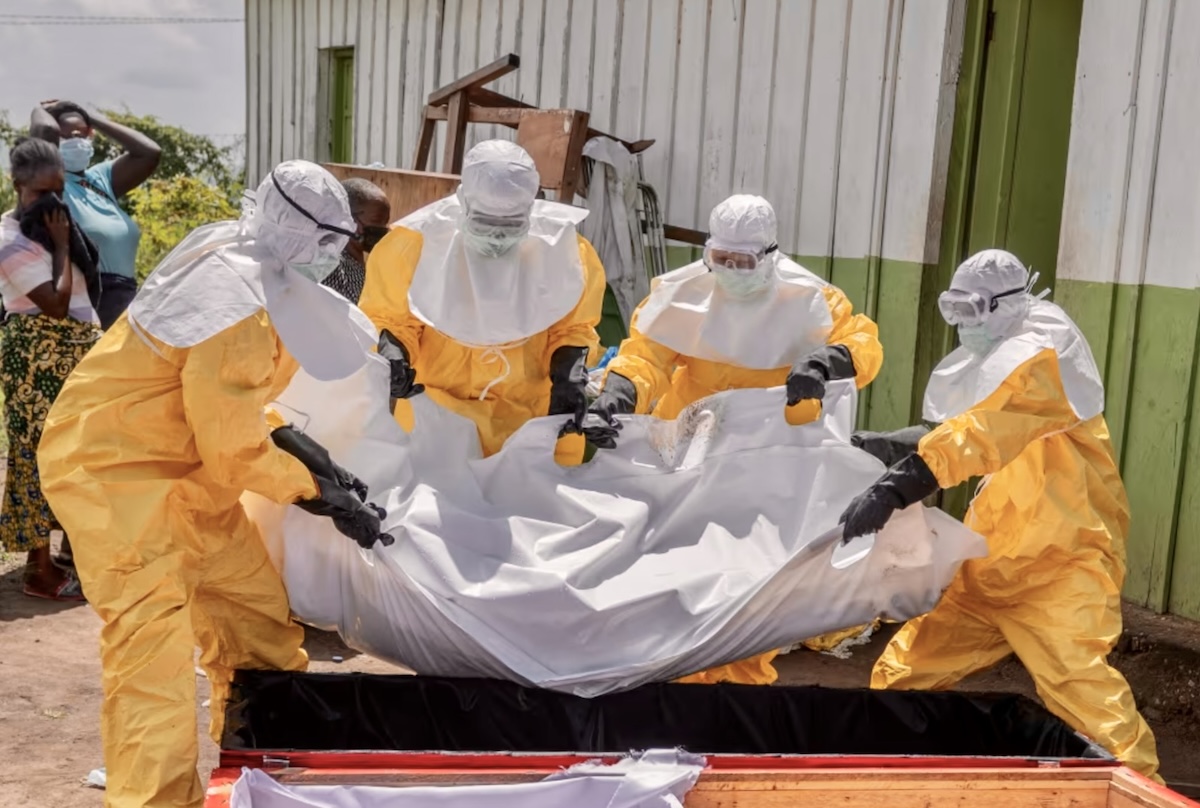
In addition, two volunteers were injured attempting a “safe and dignified burial,” the practice of burying infectious remains using protective measures. Such protocols can clash with funeral traditions that involve touching and washing the dead.
Violence against public health workers is often less a security failure than a trust issue. Community education can’t be an addendum to outbreak response; it’s the difference between a burial team that’s accepted and one that’s stoned.
The other preparedness gap is structural: African officials still depend heavily on outside suppliers for protective equipment, vaccines, and diagnostic tests.
It’s why AHF has long pushed for greater local manufacturing and for the WHO Pandemic Agreement to ensure countries can access lifesaving products and the technology needed to produce them.
The DRC is now using the Ervebo vaccine among health and frontline workers as part of research into whether it protects against Bundibugyo Ebola. The vaccine is licensed against another Ebola strain (Zaire), and its effectiveness against Bundibugyo remains unknown. As of early September, 2,007 workers had been vaccinated.
But the outbreak keeps moving: by September 23, it had reached 63 health zones across seven provinces, with conflict, displacement, and limited access to health care continuing to cause problems for the response.
Too many people have suffered and died, and larger lessons must be learned from this outbreak.
African officials, for example, should not have to improvise their way through each new emergency. Also, building community trust before a crisis and ensuring that countries already have the tools to respond to a public health epidemic are crucial precautions. To save lives, these lessons can’t be ignored.
Brian Shepherd is an Associate Director of Global Policy and Communication at AIDS Healthcare Foundation.