


Dr. Penninah Iutung, known to many at AHF as Dr. Penny, is AHF’s Executive Vice President. Her story is next in our “I Am AHF” series featuring remarkable staff, clients, and partners who are doing what’s right to save lives everyday.
Interviewed by Diana Shpak, Knowledge Management Focal Point, AHF Europe.
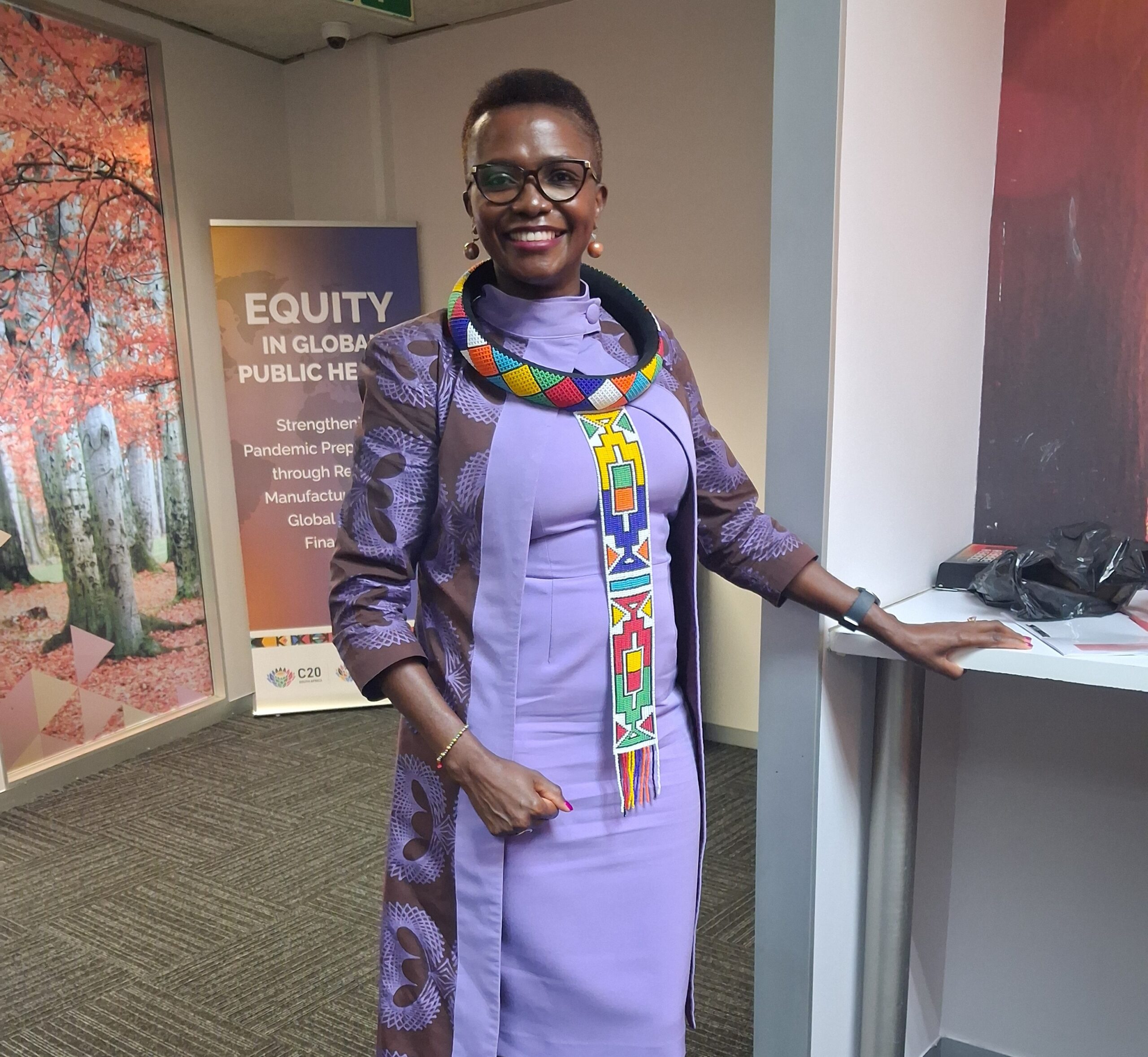
Dr. Penny Iutung
Each of us has our own mission. Sometimes it does not reveal itself all at once, but step by step, through experience, choices, challenges, and faith in our calling. This is a story of serving people at the highest level through compassion, strength, dedication, and purpose. A story of 22 years of devotion to people, to their lives, their hopes, and their futures. This is the story of Dr. Penninah Iutung, Executive Vice President of AHF.
On March 5, 2026, you reached a truly special milestone - 22 years with AHF.
Yes, 22 years. I can hardly believe it myself.
Before we explore your work, your leadership, and your impact within AHF, I would like to start at the very beginning. Where were you born? What was your childhood like? Who was little Penny before the world came to know the woman she would become?
I was born in 1975 in Nebbi District, northwestern Uganda, during one of the country’s darkest periods under Idi Amin’s dictatorship. Before I was born, my father was imprisoned for speaking out against poaching in the national parks he oversaw, a reminder of how dangerous it was at that time to stand for what was right. He was released in 1979, the year Amin fell from power. I was four years old when I truly met my father for the first time.
Soon after, my mother moved us to the capital city, Kampala, the city that became the heart of my childhood, education, and future. I later attended Mount St. Mary’s Namagunga, a boarding school run by Irish Catholic nuns. It was a place of strong discipline, academic rigor, and deep values.
Those early years shaped me profoundly. They gave me not only an education, but also the strength, integrity, and foundation that would guide the person I would become.
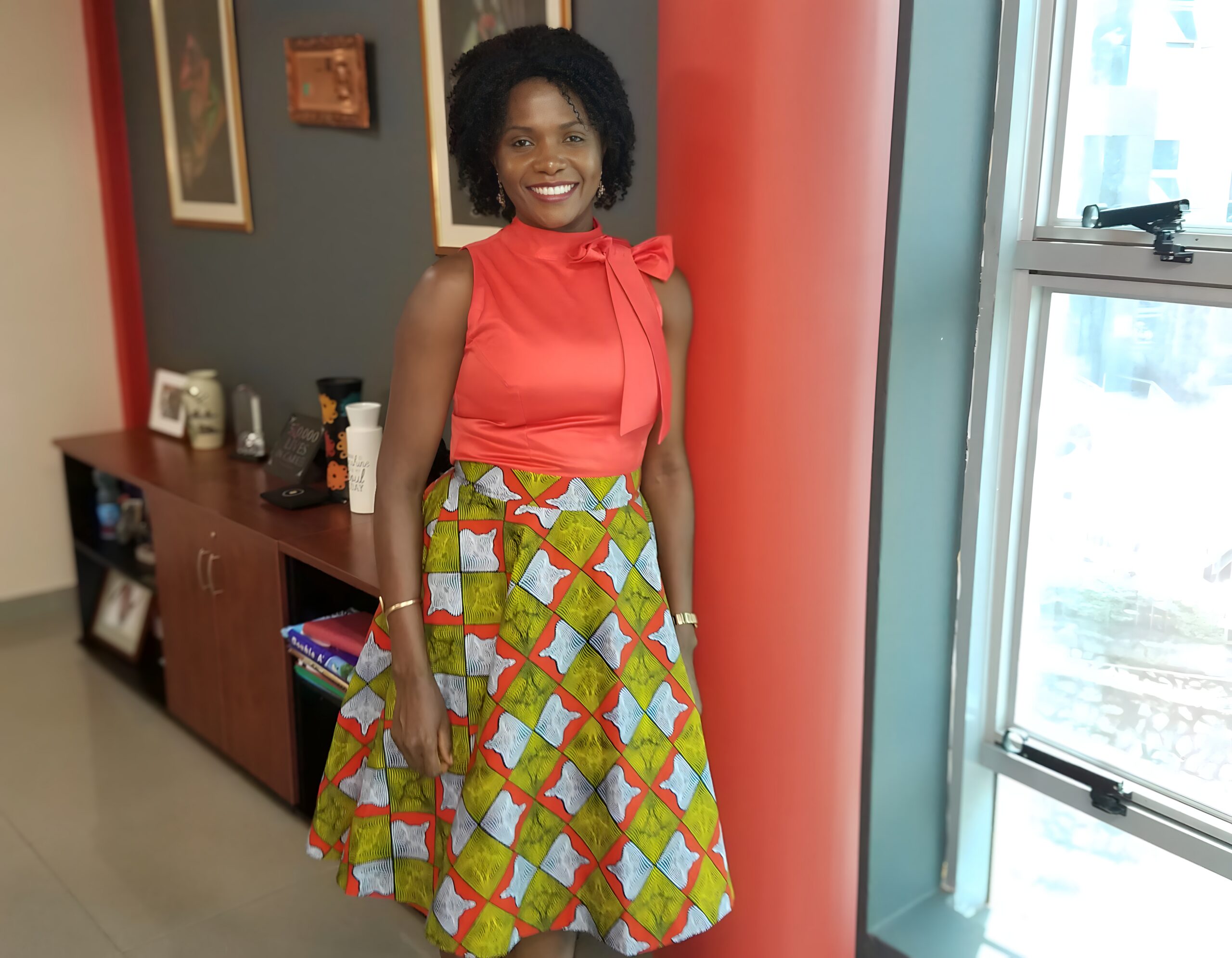
Dr. Penny at the AHF office in Kampala, Uganda, earlier in her career.
Higher education is a very formative process for many people. Was this the same for you when you studied medicine at university?
After secondary school, I went on to study medicine at Mbarara University of Science and Technology in western Uganda. At the time, it was still a relatively new institution, and together with Makerere University, it was one of only two main universities in the country offering medical training.
It was a remarkable place to study. The university was strongly science- and medicine-focused, and many of our lecturers came from abroad, including Cuba, Germany, the United Kingdom, and Nigeria. This exposed us to different cultures and approaches to teaching. We began with the foundations of medicine, such as anatomy and physiology, and benefited from small class sizes that allowed for close interaction with lecturers and a very supportive learning environment. After five years of medical school, I completed my internship at Mbarara Hospital, the university’s teaching hospital. In Uganda, that is the stage when young doctors begin practicing general medicine and serving communities directly. Those years were deeply formative for me. They shaped not only the doctor I became, but also gave me perspectives, experiences, and friendships that have stayed with me for life.
What were the biggest challenges you faced at the beginning of your medical career? And how did you eventually move into the HIV field?
After graduating from medical school, I began working as a primary healthcare doctor. I completed my studies and internship in 2000 and officially graduated from medical university in 2001. In 2002, I joined Virika Mission Hospital in Fort Portal, western Uganda, where I worked for two years.
It was a beautiful and peaceful place near the Rwenzori Mountains, run by Catholic nuns. Professionally, it was where I came face-to-face with the devastating reality of the HIV epidemic. My first encounter with HIV patients had started earlier, during medical school. In my third year, I cared for a woman with advanced HIV, tuberculosis, and severe complications. She died while we were still looking after her. It was the first time I witnessed a patient die, and that experience has stayed with me.
But at Virika, the scale of the crisis became impossible to ignore. At the height of the epidemic in the early 2000s, nearly 95% of patients in the hospital wards were living with HIV, many already in advanced stages of AIDS-related illness. The hardest part was knowing what they needed but not being able to provide it. Antiretroviral treatment existed, but it was far too expensive for most people. Priced at around $500 a month per patient, only a few patients had access to this life-saving treatment through existing research programs.
We treated opportunistic infections, stabilized patients, and sent them home, only to see them return weaker every time. When they stopped coming to the hospital, we knew they were dead. The most heartbreaking cases were the children, babies born with HIV, already gravely ill, and grandmothers carrying them because their parents had already died. Those are images that never leave you. That period shaped my path profoundly. As a young doctor, I knew the science, I knew treatment could save lives, and my hands were tied because the medicine was simply out of reach. That helplessness stayed with me and deepened my commitment to HIV care.
When did you join AHF? Do you remember your first days?
I joined AHF in March 2004, and I remember those first days vividly. For the first time, I saw what antiretroviral treatment could truly do. Patients arrived weak, exhausted, and without hope. After starting treatment, I saw them come back to life. It felt like witnessing a miracle.
That is what AHF gave me: the chance not only to care, but to truly change lives, not just for patients, but for families and entire communities. Hope for health and life became real, and people came to us from everywhere.
What made it so powerful was that HIV care did not remain only in clinics. It grew through communities, through trusted local networks, and through a model of care that reached people where they were. One of the strongest examples was in Masaka, where AHF helped build a system linking clinical care, community outreach, and referrals so effectively that UNAIDS later recognized it as the “Masaka model.”
Prior to joining AHF, my close friend, who was from Swaziland (now Eswatini), had encouraged me to apply for a job with the Ministry of Health because they were short of doctors. I had been with AHF for only three months when I finally received the long-awaited call from Eswatini.
But by then, I already knew that AHF was where I was meant to be. I stayed with AHF, and I have never regretted it. Looking back over the last 22 years, I still remember those first days as intense, transformative, and full of purpose.
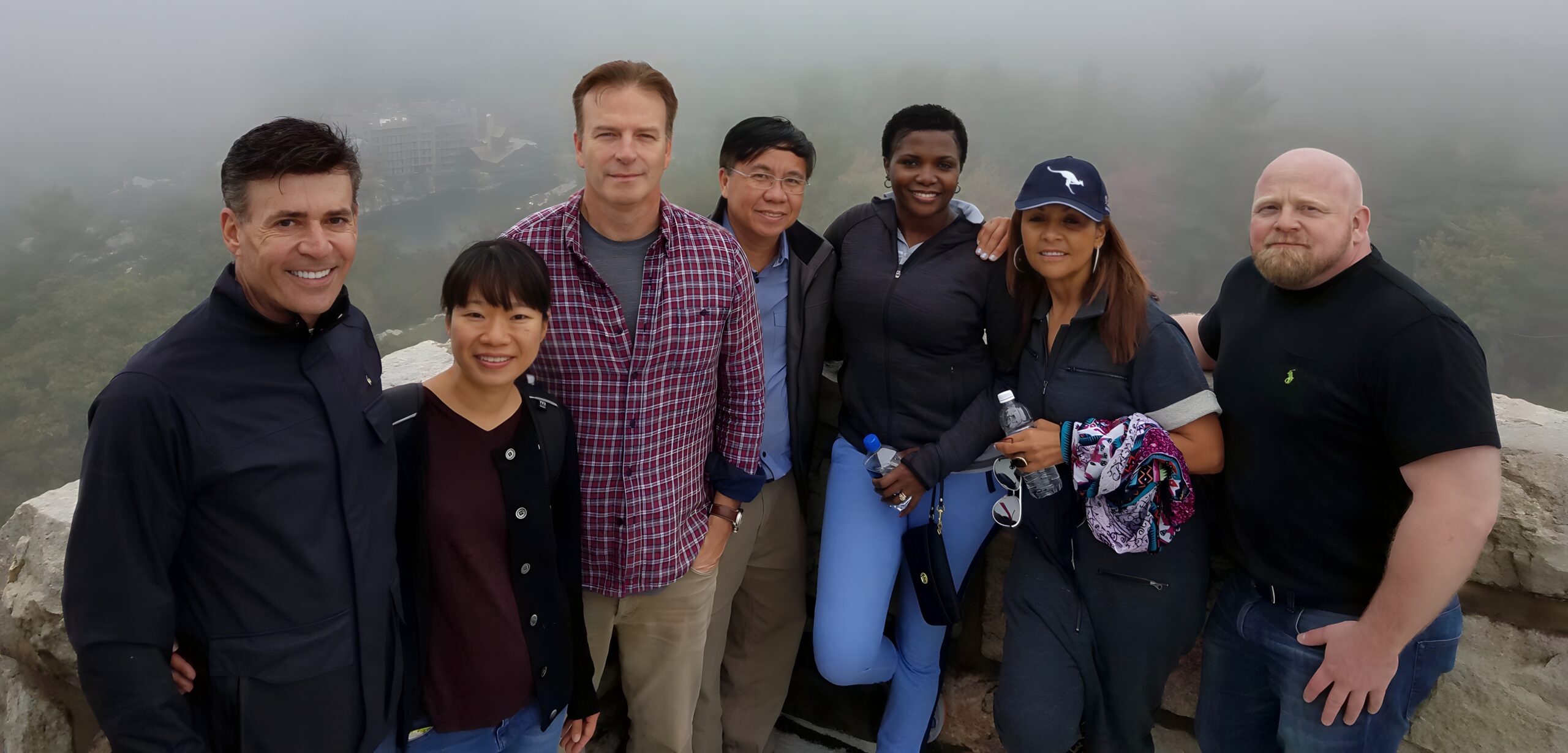
Dr. Penny with AHF colleagues at the All-Bureau Meeting held in October 2016 in Mohonk, New York.
What was your role at the beginning? How did your career develop further from there?
I began as a Medical Officer at a time when AHF was growing rapidly in Uganda, expanding from Masaka into Rakai, Soroti, and Kampala. As the program grew, my responsibilities grew with it. Around 2007, I was promoted to Medical Director for Uganda, overseeing the clinical program, mentoring doctors, supporting training, and helping expand services nationwide. Then, around 2009, I became the Country Program Director for Uganda, leading further growth in clinics and services across the country. This was also a time of innovation.
Around 2008, AHF introduced a new model for HIV testing, moving from a Voluntary Counseling and Testing (VCT) model to a rapid testing model, which made large-scale testing campaigns possible. The response was powerful: People across the country were desperate to know their status. Soon after, AHF expanded further into prevention with the introduction of Love Condoms, making prevention more visible, practical, and accessible in communities.
Around 2010–2011, I stepped into a regional role as Bureau Chief for East and West Africa, supporting AHF’s growth in countries such as Rwanda, Kenya, Nigeria, Sierra Leone, and Ethiopia. Then, in 2012, I became the Bureau Chief for Africa. This was a defining moment in my journey. By then, it was clear that while some countries had moved faster in the HIV response, Southern Africa still needed urgent expansion of treatment and care. AHF was present in only South Africa, Eswatini, and Zambia, so one of my key responsibilities became growing the program across the South. Between 2016 and 2018, we expanded into Zimbabwe, Lesotho, Malawi, and Mozambique, while also focusing on building strong local leadership. More recently, our vision has been to extend AHF’s reach across the region, with Botswana and Namibia among the next priority countries for further expansion.
That same year, 2012, was also important personally: I joined AHF senior management and completed my master’s degree in Infectious Diseases at the London School of Hygiene & Tropical Medicine.
When I look back on these 22 years, I see much more than a career. I see a journey of constant growth, service, and expansion, each step bringing greater responsibility, and with it, a greater chance to change lives.
This brings me to my next question: With so many years of leadership, growth, and coordination, what is your leadership philosophy?
For me, leadership begins with values. I always ask myself: What do people know me for, and what do they trust me for? In the end, that is what defines a leader.
I believe leadership must be authentic. It cannot be a performance. It has to be lived consistently, through your actions, your decisions, and the way you treat others every day.
The values that matter most to me are fairness, integrity, discipline, and consistency. I want people to know that I will lead with principle, act justly, and hold myself to the same standards I expect from others. Above all, integrity is essential. Without it, a leader loses the moral foundation to guide others. And beyond that, I am deeply passionate about this work. Even after 22 years, it still gives me purpose. For me, it is not just a job; it is part of who I am.
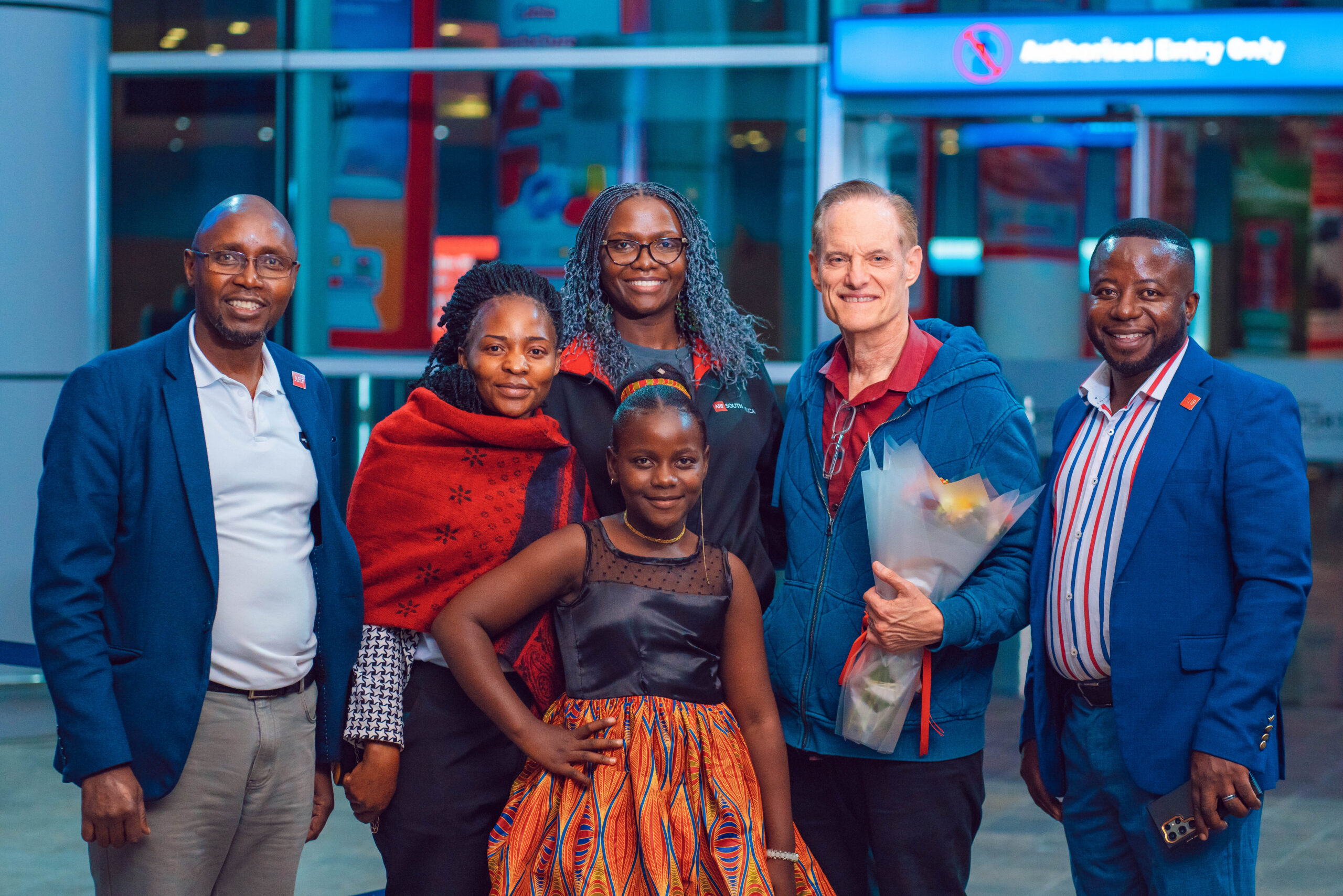
Dr. Penny and Michael Weinstein, AHF President (second from right), with AHF colleagues at the Africa Bureau Meeting 2024 in Lusaka, Zambia.
Do you have children?
Yes, I do. Sometimes I bring them to the office, and in many ways, they feel like little AHFers themselves. That shows how deeply AHF has become part of my life.
What do you see as the next frontier for AHF’s growth in Africa?
For me, the next frontier is leadership development. At this stage, success depends not only on technical expertise but on strong, courageous leaders who can manage complexity, work with governments, grow others, and carry AHF’s mission forward with wisdom and resilience. Over the years, I also learned that leadership must be developed. As doctors, we are trained to treat patients, not to lead teams. Much of my own leadership came through experience, reflection, and growth. That is why I strongly believe we must invest in leadership development, because strong programs depend on strong people behind them.
You have dedicated so much of your life to this work. But outside of AHF, what brings you joy? Do you have hobbies?
I may give most of my time to work, but there are still a few things that truly bring me back to myself. I love to dance. That is one of the purest ways for me to relax and feel free. I also love hiking and taking long walks. For me, walking is never only about movement; it is about clarity of mind and space to think. And in the last few years, I discovered something new: I have fallen in love with gardening. Not vegetables—those may not survive with me—but flowers and beautiful plants. I love finding unusual plants and seeing whether they can grow in my own garden. Some of them have become like my little babies. I also love to read, as reading feeds my curiosity. Sometimes it is a book on leadership, sometimes simply a good novel, but either way, it gives me another world to enter.
If you had the opportunity to speak to Penny of 22 years ago, just as she was beginning her journey with AHF, what would you tell her?
I think the most important thing I would tell her is this: Trust yourself more. I would remind her that she is a good decision-maker, and that she should listen less to the noise around her and more to her own inner voice. There were moments in life when I knew deep inside what was right for me, but I still followed what society expected, what seemed normal, or what others thought I should do. Those were the decisions I later regretted. I would tell my younger self to be confident in your choices and stay true to yourself. And perhaps one more thing, I would also tell her to find a better balance between being generous to others and investing in her own future. But above all, I would say: You are stronger, wiser, and more capable than you think. Trust your path.
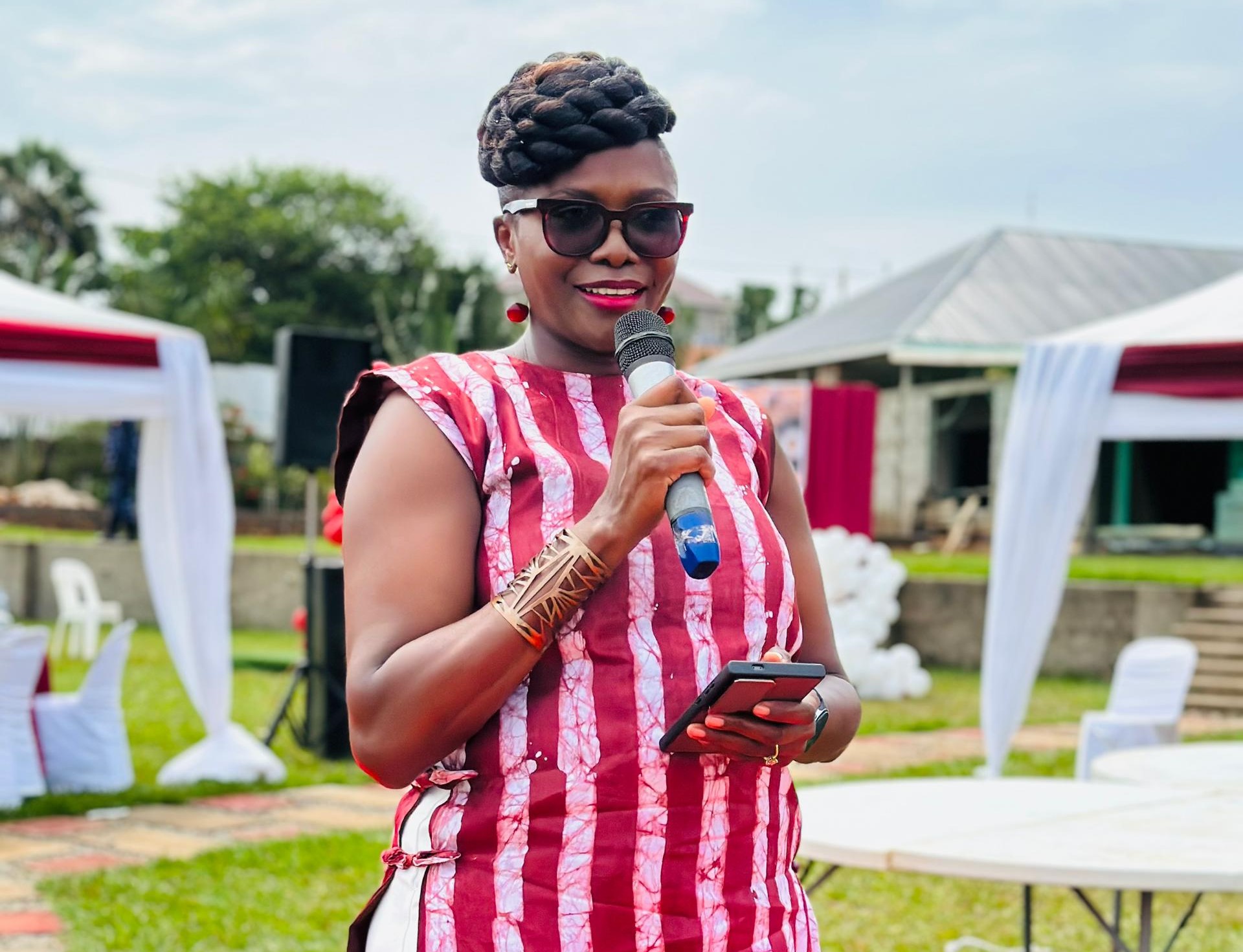
Dr. Penny speaking at the AHF Uganda Cares holiday party, 2025.