
Radheshyam Shrestha is AHF Nepal’s Program and Marketing Coordinator. His story is next in our “I Am AHF” series featuring remarkable staff, clients, and partners who are doing what’s right to save lives everyday.
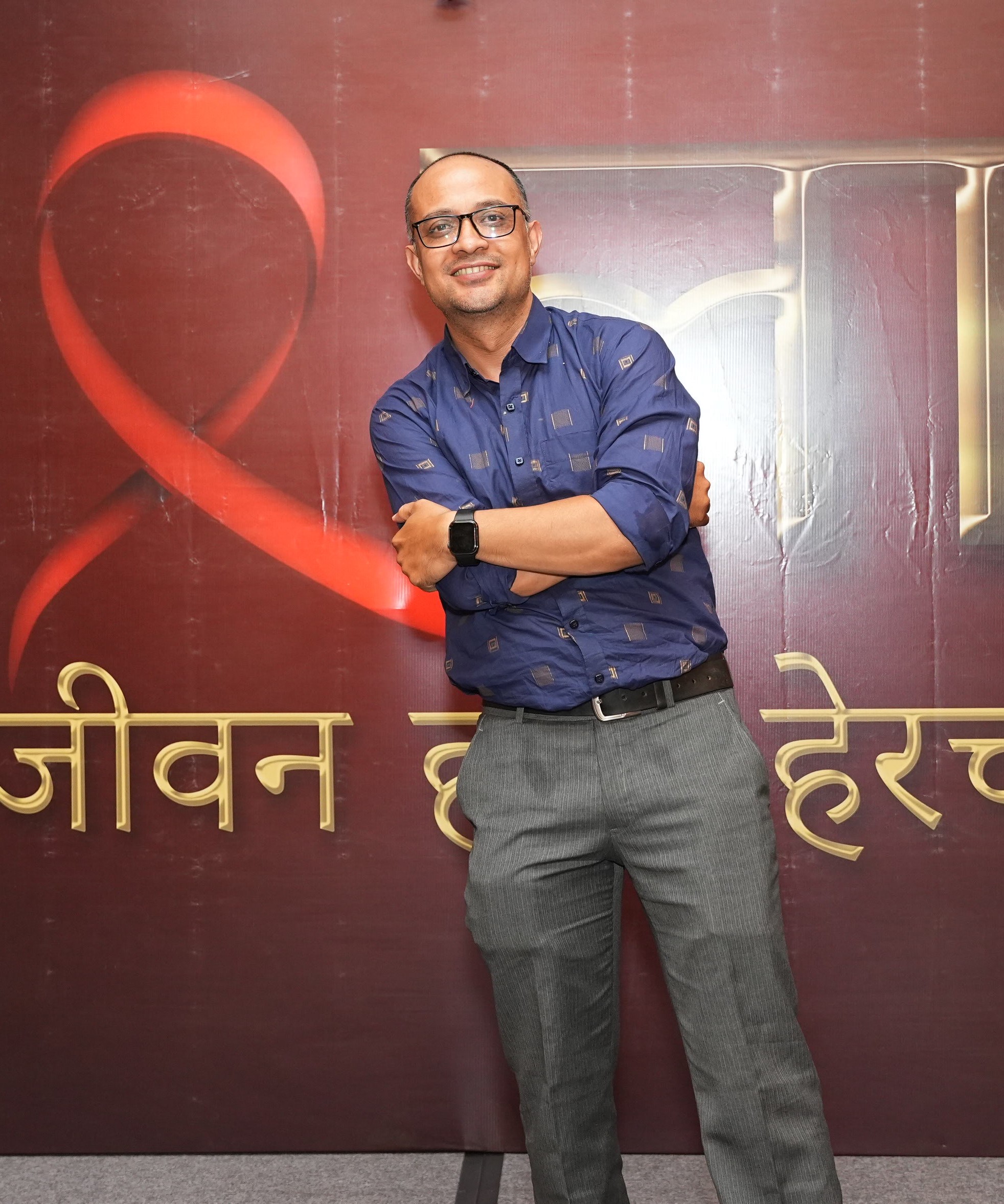
I was born and raised in a small village in Nepal with no health facilities and no access to transportation. Reaching the nearest hospital required a two-hour walk, and far too often, children lost their lives to illnesses that were entirely preventable and treatable. When we fell ill, we relied on medicines purchased from a small local pharmacy that had neither trained health workers nor a qualified pharmacist.
Even as a child, I felt a strong calling to become a health worker and serve communities like mine. After completing my schooling, I pursued studies in the health field. During my training, I spent one month at the Infectious Disease Hospital, where I witnessed the stigma and negative treatment faced by people living with HIV who were admitted. That experience deeply moved me and strengthened my commitment to work in the HIV sector, where I could help provide more compassionate and equitable care.
After completing my Health Assistant training in 2004, I began my career at Bir Hospital as a Medical Assistant. In May 2005, I transitioned to the NGO sector, working with people who inject drugs and people living with HIV. At that time, HIV treatment in Nepal was overshadowed by fear and stigma. Even health workers were reluctant to touch people living with HIV, and many patients died without receiving timely or appropriate care.
One incident remains deeply etched in my memory. A person living with HIV was brought to our clinic in critical condition and urgently required hospital admission. Several hospitals refused to admit him, and he was eventually brought to our NGO clinic. As the only health worker present, I provided care to the best of my ability. His condition initially improved, but on the third night, I received a call that his health had suddenly deteriorated. I advised that he be transferred immediately to a government hospital. Early the next morning, I rushed there, only to learn that he had already passed away.
I was devastated. Basic tests that should have been conducted after his admission were never done, and even proper post-mortem care was not provided. I argued with the hospital staff and returned home in tears, haunted by one question: How long would people living with HIV continue to die like this?
At that time in Nepal, antiretroviral (ARV) medicines were available only to a limited number of people. Patients had to wait for a quota, and often only after one person died would another become eligible for treatment. Accessing even basic non-ARV medicines was a daily struggle.
Hope arrived in 2008, when AHF entered Nepal. By 2009, visible change had begun, and patients started receiving treatment with dignity. From that moment, I knew I wanted to work with AHF.
In 2012, that opportunity came when I joined AHF and was posted to the Butwal ART (antiretroviral therapy) Center as ART Coordinator. AHF was collaborating with the Government of Nepal to strengthen HIV services, but at the time there was little more than a building—no trained doctors, counselors, nurses, or peer educators. Although laboratory facilities existed, patients could not access them due to stigma and discrimination.
My immediate priority was to ensure that trained service providers were available. When doctors were unwilling to travel for training, I proposed conducting it locally. With strong support from my supervisor and the commitment of HIV experts from across Nepal, we successfully conducted a six-day training for 20 participants, including doctors, nurses, and paramedics. It became one of the first ART trainings held outside of Kathmandu.
During my time at Butwal, a visit from WHO and government officials left a lasting impression on me. I had conveyed AHF’s prevention and treatment protocols, including community-based testing and treatment, as well as the use of tenofovir as a first-line regimen. When a WHO doctor questioned whether this approach was feasible in Nepal, I responded that it was not only feasible, but essential. Today, seeing this approach adopted globally fills me with pride and affirms the foresight of AHF’s leadership.
When I first began working in this field, very few people came forward for HIV testing. Most sought testing only after developing severe opportunistic infections, largely due to a lack of awareness about early detection and treatment. Today, opportunistic infections are far less common, and mortality among people living with HIV has declined significantly. This progress reflects the expansion of testing services into even the most remote and underserved communities, ensuring earlier diagnosis and timely treatment.
Now serving as Program and Marketing Coordinator for AHF Nepal, I feel immense satisfaction seeing how accessible HIV services have become. This progress would not have been possible without AHF’s support and strong partnership in Nepal.
Outside of work, I recharge by spending time with my family. Being with them reminds me of the purpose behind my work. I also enjoy walking, listening to music, and participating in community and cultural activities. These simple moments keep me grounded and allow me to return to my work with renewed energy.
One day, I hope to meet AHF President Michael Weinstein, shake his hand, and thank him for his courage, vision, and the encouragement he continues to give to those of us on the frontlines.