
Brunilda Rodríguez is a social worker with AHF Panama. Her story is next in our “I Am AHF” series featuring remarkable staff, clients, and partners who are doing what’s right to save lives everyday.
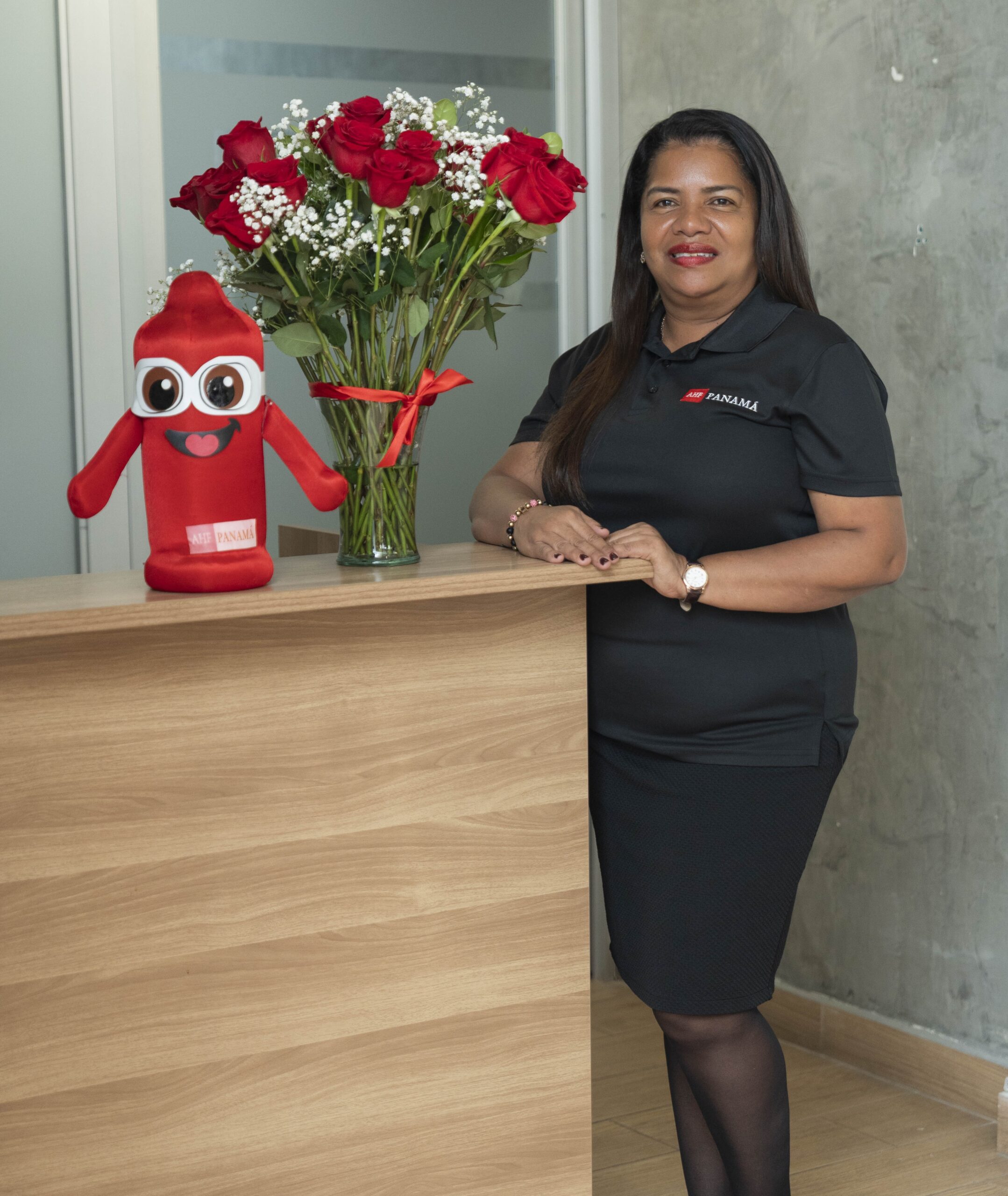
As a social worker, I am committed to supporting individuals and their communities, with a special focus on those whose health conditions limit their ability to enjoy a high quality of life.
I began my professional practice by conducting prevention and motivational talks for community groups and developing resocialization workshops for individuals in correctional facilities. From 2016 to 2019, I collaborated on the National Project for the Renewal of Colón, a city deeply affected by poverty, unemployment, and lack of opportunities. In this role, I directly supported families impacted by construction projects and the relocation process.
In 2020, I was given the opportunity to join AHF Panama’s antiretroviral treatment clinic in Colón as a social worker. I did not hesitate to accept, as I have relatives and friends living with HIV, and I recognized this as my chance to deepen my knowledge of the issue while contributing to the well-being of those affected.
Accompanying families through meaningful processes of personal and community transformation—seeing them regain hope and improve their living conditions—has been profoundly enriching and is, without question, the most rewarding part of my work at AHF Panama. I also deeply value the teamwork within AHF, where every action is guided by a genuine commitment to dignity and well-being. Knowing that my work has a tangible, positive impact on people’s lives motivates me every single day.
In my role, I support clients in maintaining consistent attendance at their medical appointments and adherence to their prescribed treatment. I also collaborate closely with clinic staff and clients to deliver health education and promotion, mediate personal and family conflicts, and develop self-help and empowerment programs. Beyond these responsibilities, I actively advocate for social justice, working to ensure that people living with HIV are treated with dignity and respect, free from stigma and discrimination.
One of my most meaningful experiences was supporting a woman who, due to lack of resources during her prenatal care, did not receive an HIV test. The virus was only detected when she arrived at the hospital already in labor, and her baby was born with HIV. After discharge, we arranged for the baby to stay at Albergue de María, which cares for children of mothers with HIV. The baby faced complications and remained hospitalized for two months, during which I stayed in close communication with the mother, supporting her as much as AHF Panama could. When concerns arose about the mother’s ability to care for her child, we visited the family’s home and found extreme poverty. I coordinated with regional social workers to organize a food and clothing drive. Today, the family has better housing, receives weekly food deliveries, and the baby is healthy and full of life. That is one of the many satisfactions I carry.
Another patient, due to poor adherence to treatment and opportunistic illnesses, developed mobility and speech disabilities. She had no family support, as her children did not consider her their mother. I coordinated with her sisters to contact the children, and during a family meeting I explained the importance of support in situations of disability. Today, the patient is undetectable, and her daughter accompanies her to medical appointments. I ensure she attends her visits and collects her medication, maintaining communication with the clinic’s pharmacist to follow up when patients miss appointments.
HIV does not define those who live with it. Thanks to medical advances and social support, a full and healthy life is possible. What must change is prejudice. People living with HIV deserve respect, not rejection. HIV is not transmitted through love, friendship, or empathy. Let us break the silence and end stigma.
Being a social worker supporting people living with HIV requires a deep commitment to social justice and empathy, and it also entails significant challenges. One of the main challenges is stigma and discrimination. People living with HIV often face social, workplace, and family prejudices, and it can be disheartening to witness these injustices repeatedly. Another challenge is unequal access to resources and services. In many environments, people living with HIV do not have consistent access to medication, psychological care, or social support, and we often find ourselves acting as mediators between fragmented systems.
Many people living with HIV simultaneously face poverty, violence, substance use, or discrimination based on gender or sexual orientation. This reality demands a comprehensive and culturally sensitive approach to care. To cope with these challenges, I rely on resilience strategies such as participating in clinical supervision, peer support groups, and emotional release spaces. Above all, I remind myself of the social purpose of my profession, which helps sustain my motivation in the face of adversity.
I began working for AHF as the COVID-19 pandemic unfolded, supporting tracing, emergency response, and coordinating medication delivery for patients with limited access. I enjoyed what we were doing to help others. When we arrived at people’s homes dressed like astronauts to deliver medication, they were deeply grateful. That experience shaped me and gave me the opportunity to establish myself within AHF.
Outside of work, I enjoy dancing and spending time with my family. Since the passing of my mother and older sister 16 years ago, our family bond has grown stronger, and we cherish exploring local tourism and celebrating every birthday together.