



Professor Wang Min is the retired Chief Physician of the Department of Infectious Diseases at Changsha First Hospital in China, and now she works with Renyi, an NGO affiliated with the hospital. As an AHF China partner, she has collaborated on annual commemorations like International Condom Day and Menstrual Health Day, among many other initiatives. Her story is next in our “I Am AHF” series featuring remarkable staff, clients, and partners who are doing what’s right to save lives everyday.
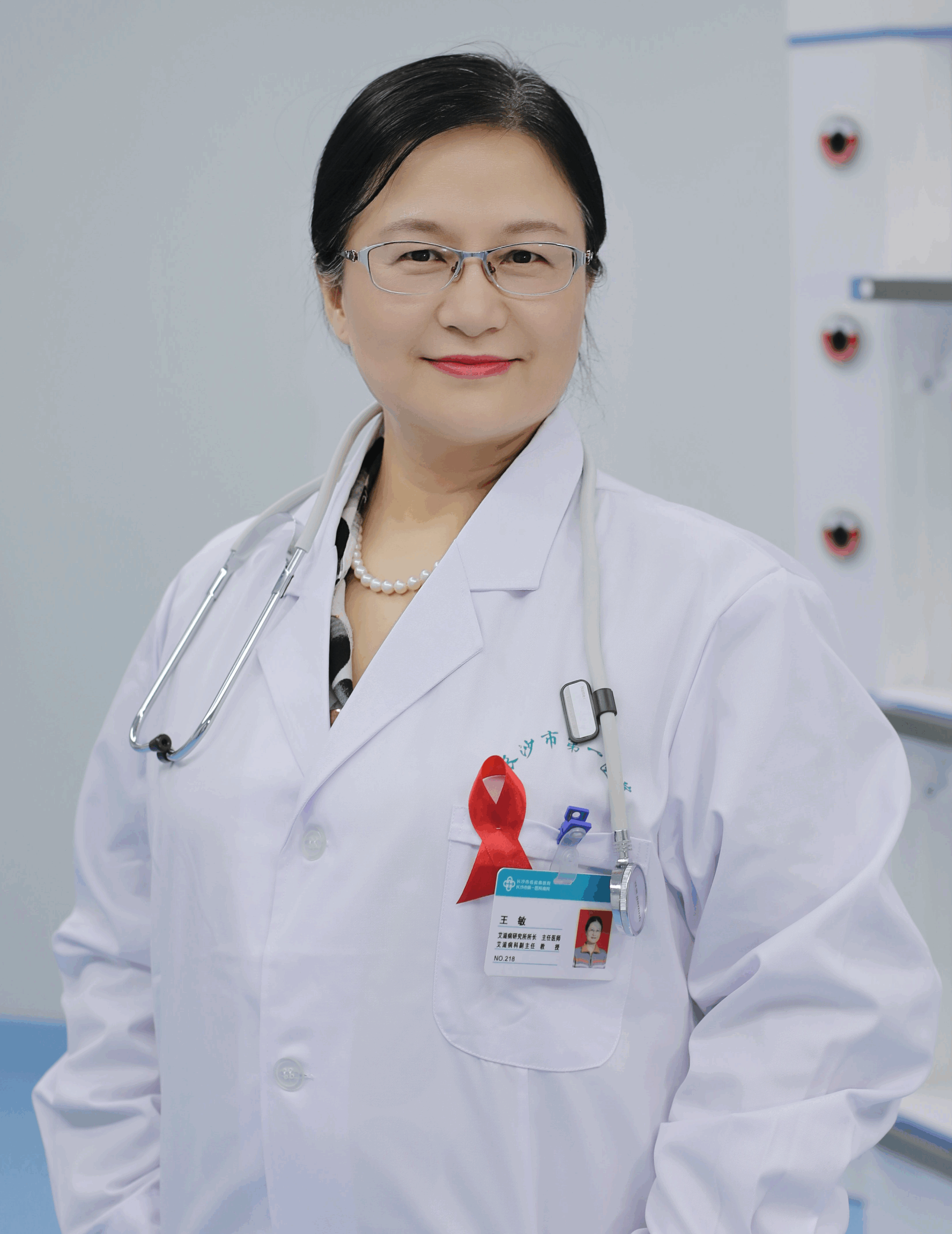
In 1992, as a young doctor specializing in infectious diseases, I faced a pivotal decision while pursuing a training program in Japan. At the time, HIV/AIDS prevention in China was still in its infancy, whereas Japan had already made significant strides. Recognizing the urgent need back home, I decided to dedicate my career to HIV/AIDS prevention and control.
Years later, after witnessing countless patients become infected due to misinformation, I turned to social media to combat one of our greatest modern challenges—false information. The internet is flooded with myths about HIV, and I wanted to create a space where people could access accurate, compassionate, and science-based information. It was deeply rewarding to see patients visiting my clinic because they had watched my videos and felt encouraged to seek care.
My journey into content creation truly began around World AIDS Day 2023, when I collaborated with a social media influencer on two videos: “How Dangerous are High-Risk Sexual Behaviors” and “What to Do If Deliberately Infected?” Each video reached over 10 million views on Douyin (TikTok) and attracted hundreds of thousands of likes. Many students, acquaintances, and patients mentioned watching my videos, making me realize the significant impact social media could have, which led me to start my own social media content creation journey under the username ‘Super AIDS Fighter.’
The transition from physician to content creator was not easy. I had no professional equipment, scriptwriters, or editing team—just a smartphone and determination. Over time, I built a small team of young doctors, nurses, and volunteers, each contributing their strengths in brainstorming, filming, and post-production. Together, we refined our process and produced high-quality, accessible short videos.
I design my content around the latest global and domestic HIV treatment guidelines, simplifying complex medical information with plain language, visuals, and animation. Our content appears on multiple platforms—WeChat Video Channel, Douyin, Today’s Headlines, and Bilibili—each selected to reach different audiences. The impact has been remarkable: About 90% of patients who visit for consultation have watched my videos. Their feedback has guided my approach. Short, focused clips of 30–40 seconds are most effective, though some topics merit longer discussions.
As medical professionals, we have a responsibility to share accurate health information and bridge the gap between expert knowledge and public understanding. Social media has become a powerful ally in this mission. Many viewers tell me they now understand how to prevent HIV, have overcome fear, and feel supported by their families. Hearing this reinforces my belief that digital outreach can save lives.
Looking ahead, I plan to expand into live streaming and scenario-based storytelling to make content even more engaging. This work has not only connected me with thousands of followers—it has deepened my sense of purpose as a physician. My advice to young healthcare professionals entering this space is simple: Stay true to your expertise and never compromise accuracy for attention.
Ultimately, my mission remains the same as it was in 1992—to fight stigma, empower patients, and ensure that everyone has access to the knowledge they need to live healthy, confident lives.