
As global health funding shrinks and governments face growing financial pressures, millions of young people risk losing access to essential HIV prevention, sexual health education, and other services that can protect them throughout their lives. With hundreds of thousands of young people acquiring HIV each year worldwide, sustained investment in youth-friendly health services and in opportunities for young people to lead prevention efforts is critical to protecting their health and futures.
Globally, 370,000 young people ages 15 to 24 acquired HIV in 2024, including 145,000 adolescents ages 15 to 19. In 2025, an estimated 93,000 children ages 14 and younger acquired HIV. Adolescent girls and young women in sub-Saharan Africa face particularly high risks, accounting for approximately 160,000 new HIV infections in 2025, with infection rates three to four times higher than their male peers.
Fortunately, effective approaches already exist.
Youth-friendly HIV and sexual and reproductive health services, age-appropriate comprehensive sexuality education, and safe spaces for learning and dialogue help young people make informed decisions and protect themselves from HIV and other sexually transmitted infections. But far too many still can’t access these resources.
AIDS Healthcare Foundation supports young people through programs such as Girls Act, Boys2Men, and other young people’s programs that build knowledge, confidence, and leadership skills. These efforts recognize that young people are not just recipients of health information, but also essential partners in creating healthier communities.
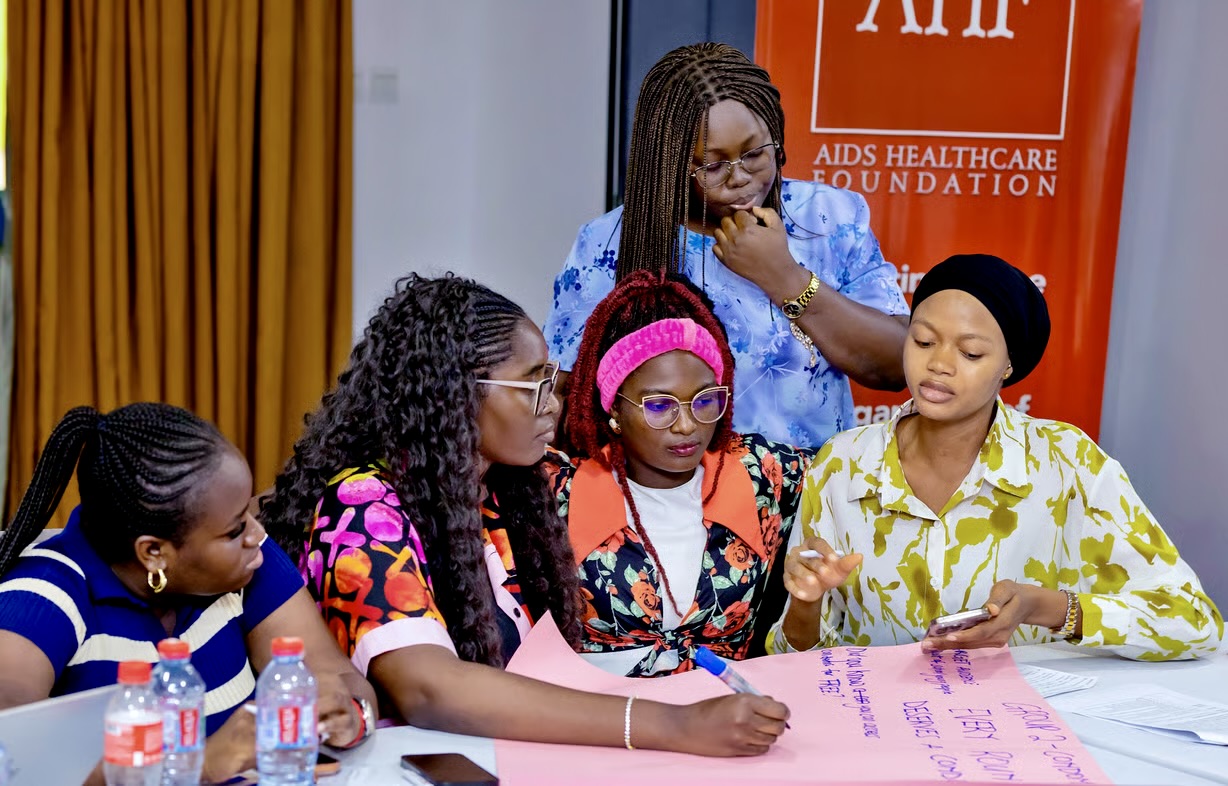
That approach was on display in Ghana last month when AHF partnered with the Ghana AIDS Commission to bring together youth-led organizations and social media influencers. Participants discussed condom use, STI prevention, and barriers to accessing services, then developed messages in their own words to share with their online communities (pictured above).
“Growing up, most of the conversations I heard focused on abstinence, but the reality is that not every young person makes the same choices,” said Oduro Nathaniel, an event participant. “Religious institutions can help parents understand that talking about condoms doesn’t encourage young people to have sex; it equips them with information that could protect their health and future.”
But youth leadership and civil society efforts can’t replace sustained government investment. As developing countries struggle with mounting debt and constrained budgets, AHF’s Freedom from Debt campaign calls for reforms that let governments prioritize health, education, and other essential services over unfair debt obligations.
Investing in young people’s health today means fewer preventable infections, stronger communities, and healthier futures. The knowledge and tools already exist. What we need now is the political commitment and funding to ensure every young person can benefit from them.
Brian Shepherd is the Associate Director of Global Policy and Communications at AIDS Healthcare Foundation.