Bad news, bears. Koalas, everybody’s favorite marsupial found only in Australia, are being devastated by a chlamydia outbreak.
It seems the country’s population of the lovable furballs is under attack by a strain of chlamydia (chlamydia pecorum) that is related to a similar sexually transmitted chlamydia infection found in humans. Chlamydia remains one of humanity’s most common and communicable sexually transmitted infections. Fortunately, it is treatable in humans. Among koalas, however, the outbreak is a killer.
In koalas, chlamydia is progressive, painful — and deadly. Once infected, chlamydia can affect koalas from top to bottom, with the bacterial infection causing eye disease severe enough to cause swelling, discharge, and even permanent blindness. Many koalas die because blindness then hinders their ability to climb trees and find food (they are fussy eaters — almost exclusively eucalyptus leaves).
Infected koalas can also suffer bladder infections, cystitis, infertility, incontinence, and what is called “brown bottom” or “wet bottom,” indicated by fur staining down under around an animal’s rump. Chlamydia is believed to be responsible for as many as half the koala deaths in the country’s wild populations
Thankfully, there is hope on the horizon. In July, CNN reported that Australia’s University of the Sunshine Coast received a “world first” approval to roll out a one-dose vaccine it spent more than 10 years developing to protect koalas from the effects of chlamydia.
Researchers at the University of the Sunshine Coast believe their decade-long research and development of a chlamydia vaccine for koalas could also help humans. They noted in an April report on the University of the Sunshine Coast’s Medical Express news site that it “…could help accelerate human vaccine development for one of the world’s most common sexually transmitted infections,” also citing a paper published in Trends in Microbiology that outlines how “… more than a decade of koala vaccination research is providing lessons for global efforts to develop a human chlamydia vaccine, something that has so far eluded scientists.”
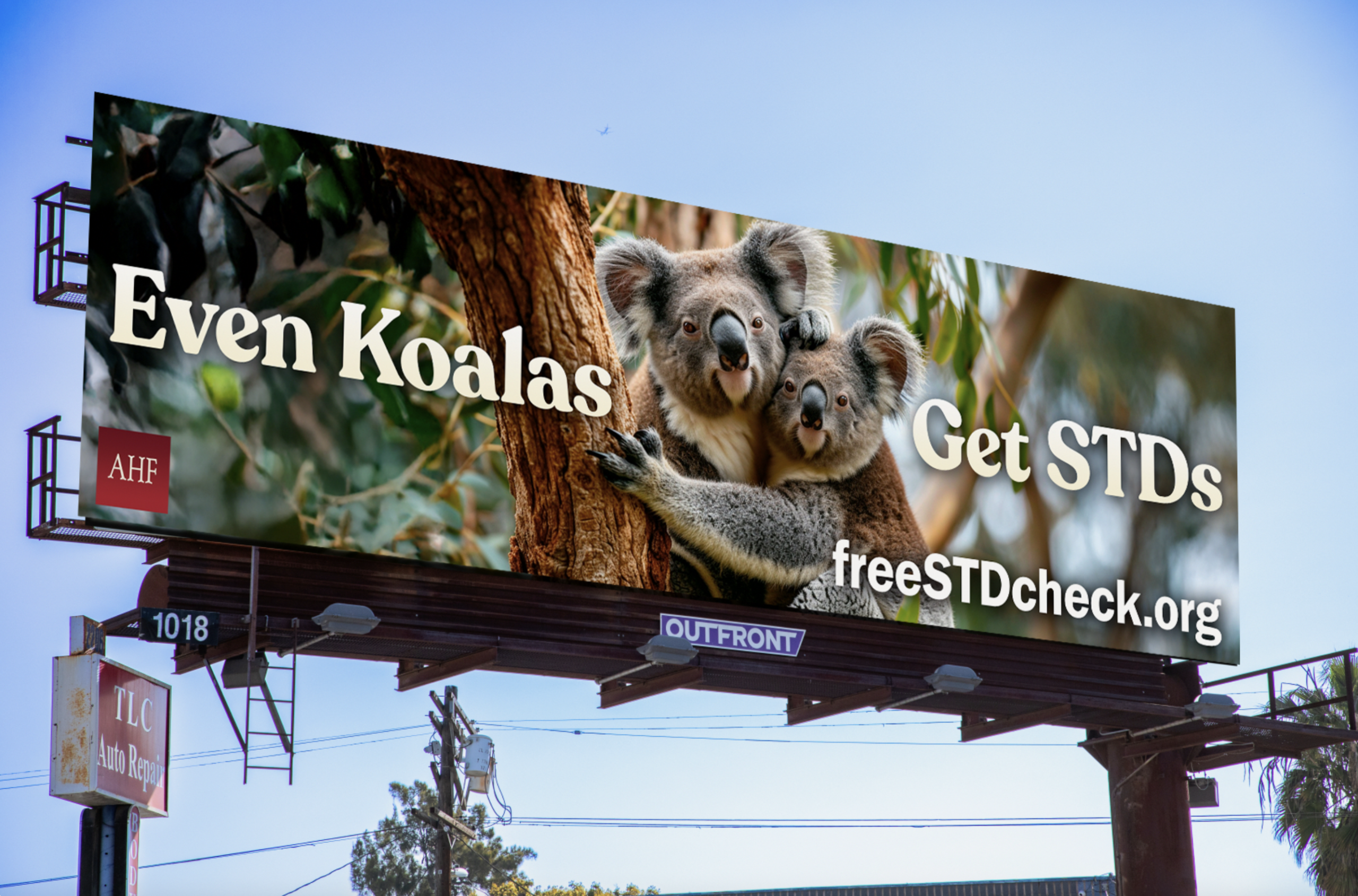
With hopeful news for koalas and heightened public attention on koalas and their chlamydia connection, AIDS Healthcare Foundation’s (AHF’s) Media and Public Health divisions will soon roll out an edgy new prevention billboard campaign — “Even Koalas Get STDs” — targeting human populations to promote AHF’s FreeSTDCheck.org referral site.
In 2025, AHF tested over 168,00 people for STIs, including running 559,306 tests for chlamydia and 565,985 tests for gonorrhea (test numbers for chlamydia and gonorrhea include testing at multiple anatomical sites per person, which is why each test number is much higher than the total number of people tested).
A promising new medical development helps ailing koalas with chlamydia Down Under. A laudable achievement in and of itself, one which also gives rise to AHF’s cheeky new STD prevention awareness campaign for humans all over.
Ged Kenslea, Senior Director of Communications at AIDS Healthcare Foundation, has worked on public health issues for 30 years.