Loveth Orlaade is an adherence counselor with AHF Nigeria. Her story is next in our “I Am AHF” series featuring remarkable staff, clients, and partners who are doing what’s right to save lives every day.
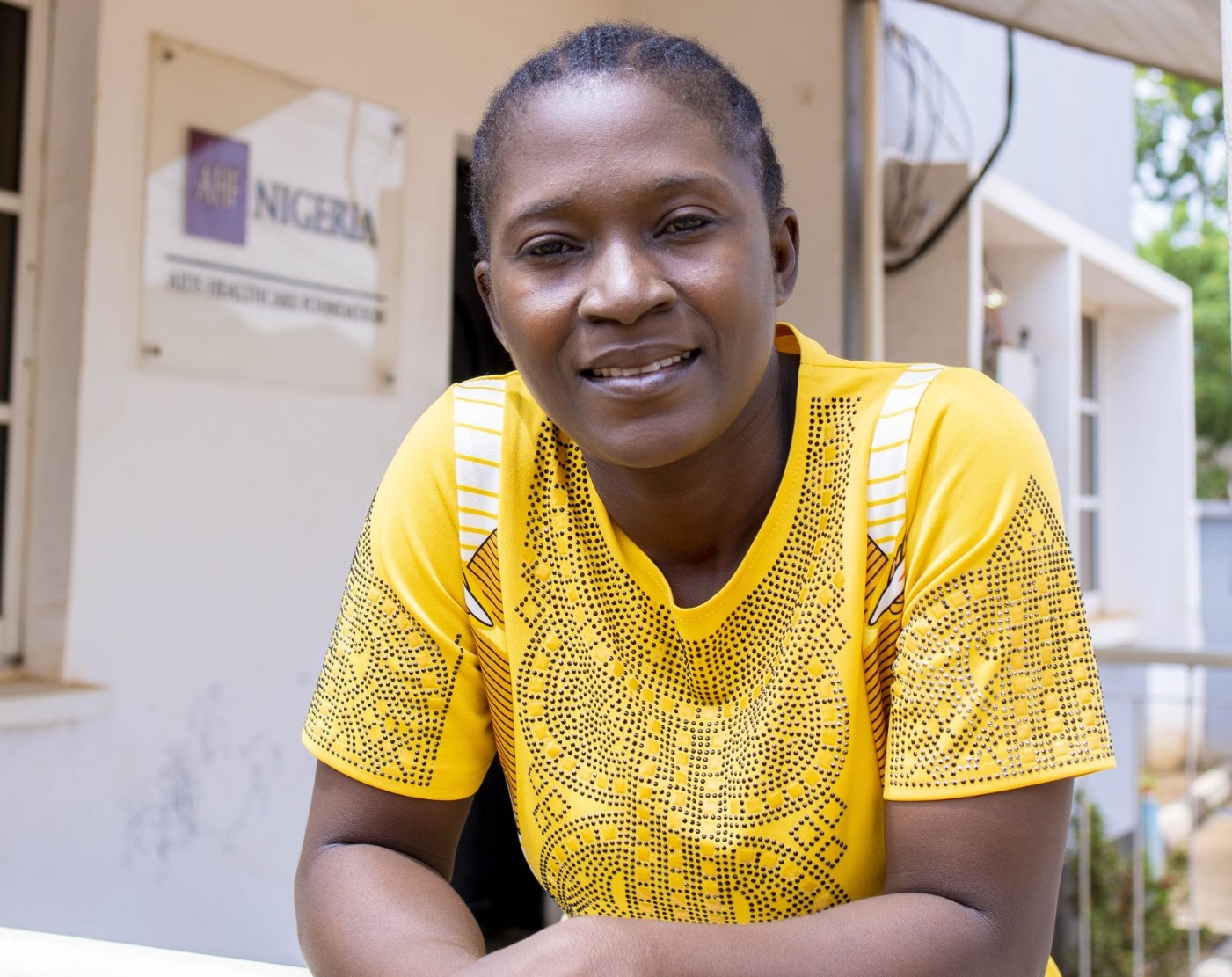
My childhood was peaceful and full of joy. I grew up with both my parents and four siblings in a lively home filled with conversation, laughter and love. As a teenager, I loved to joke, listen to music and read novels. I dreamed of becoming a nurse because I cared deeply about helping others and hated seeing people in pain. Although life took me in a different direction, that desire to care for and support others has remained central to who I am.
I studied for the National Certificate in Education after my father was unable to support my original choice of Guidance and Counselling. I thought I might become a teacher, although my real dream was to work in health.
At 18, I decided to find out my HIV status as a way of taking care of my health and being proactive about my future.
Even though getting tested was my decision, waiting for the result was difficult. I was anxious, and so many questions were running through my mind. If I was positive, could I still get married and have children? Could I continue my education? How would my parents react?
When I received my positive result, there was a lot to process. It was not easy, but I found the courage to face it and focus on living a healthy and positive life.
The first people I was able to talk to after my diagnosis were my fiancé and my uncle. My uncle was a laboratory scientist at General Hospital, North Bank, in Makurdi, Benue State. They both encouraged me not to give up because of my status and advised me to start treatment immediately. Their support gave me the encouragement I needed to move forward and begin taking care of my health.
My uncle later disclosed my HIV status to my father without my knowledge, and it became a serious conflict within my family. My father stopped supporting my education and told me he was disappointed in me. He believed I would die and feared I would infect my siblings, so he asked me to stay away from them and stopped allowing me to eat with them.
I felt completely overwhelmed and even had thoughts of taking my own life with poison. It took time to recover from the shock, accept what had happened and begin making new plans.
Leaving school without warning or a plan was very difficult. By then, I was a mother of two children. I sold goods to earn money for food, while neighbors sometimes helped when the children were sick. I felt completely shattered, but I knew I had to keep going for my children and find a way to continue my education.
My connection with AHF came through one of my neighbors, Nelson Ayator Ngusha, who worked for AHF as a data clerk. At the time, I was working as a class teacher and would often see Nelson passing by the school carrying large registers and a shuttle bag. I enjoyed talking with him, so one day I asked him where he went every day with all those materials.
He explained AHF’s HIV prevention and treatment activities. I asked if I could join him, and after he spoke with his supervisor, I received a call a week later inviting me to join the team.
I resigned from my teaching job and started working with AHF as a volunteer. I received two weeks of training as an adherence counselor and then began working with clients. At the time, AHF did not yet have its own facility in the area, so we worked from different locations, including Gbajimba, Daudu and Agasha. We also traveled to villages in the interior of Guma Local Government Area, providing counseling, HIV testing and free condoms.
Because I was living with HIV myself, I felt that working with AHF would give me more courage to take my medication and allow me to encourage other people living with HIV by using myself as an example. I also believed that joining AHF would help me prove that I would not die the way my father expected me to, and that I could continue learning and growing.
Around this time, I asked to transfer my care to General Hospital Gbajimba, an AHF facility, because of the quality of its services I witnessed when volunteering. I cannot fully explain the joy I felt when I connected with AHF. The anger and pain I carried because of what my father had put me through began to fade. I became more independent and started seeing myself differently. My life had direction again, and I had a renewed sense of purpose.
I was eventually able to return to school and continue my education. I studied Guidance and Counseling, as I had originally wanted to when I was younger. At first, I used my stipend from AHF, which I received as an expert client, to support myself. During my second year at university, many volunteers, including me, were disengaged. Without that financial support, I nearly deferred my admission because I could no longer afford school.
One of my sisters encouraged me not to give up. I repeatedly contacted Mrs. Ruth Atabo, AHF Nigeria’s State Nursing Coordinator, and told her I was willing to do any available work, even cleaning, if it would help me pay my fees. Later, a staffing need arose at the Daudu facility, and I was called back as an adherence counselor. I began receiving a stipend of thirty thousand naira and was able to continue my education. I eventually completed my degree and acknowledged AHF Nigeria in my project because I knew I would not have obtained the degree without that support.
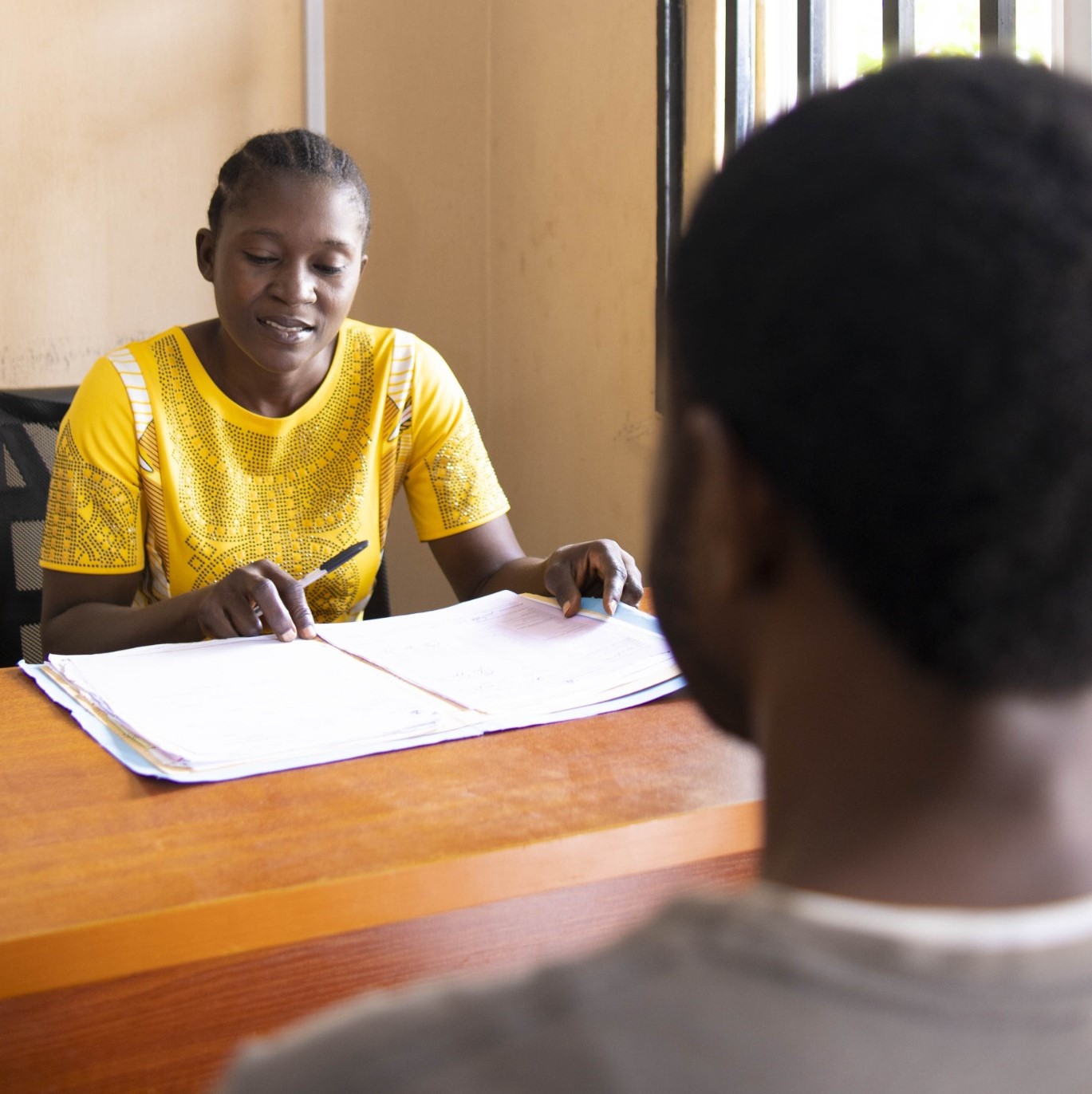
Today, my role at AHF is multi-purpose. I assist in the counseling unit, track clients who miss appointments and clients who are lost to follow-up so we can bring them back into care. I also coordinate mentor-mother activities to support mothers living with HIV, helping them stay healthy and give birth to HIV-negative babies.
Clients know my HIV status and often trust me with things they may not tell doctors or nurses. When necessary, I bring those concerns to the attention of the physician. I also help with differentiated service delivery for stable clients who lack transport, including picking up medication for them and reminding them when viral-load samples or data capture are due.
Because of what happened to me, I think carefully about disclosure and confidentiality. I learned the hard way how painful it can be when someone’s status is shared without their consent, so I protect my clients’ information carefully. I believe disclosure should always be voluntary and happen when a person feels safe and ready.
I have faced stigma both at home and in my work as a classroom teacher. A neighbor who learned about my status through my father removed her son from my class because she believed I might infect him. Today, stigma no longer has the same power over me. I do not hide my status or allow shame to define me.
To a young person today facing a similar situation, I would tell them not to give up. Your HIV status does not take away your value. Take your medication, ask for help when you need it, and do not isolate yourself. Keep learning, working and dreaming. Most importantly, HIV is not the end of your life.
Looking back on my journey, I am proud that I did not give up. I got married, earned my degree and have two children who are HIV negative. I turned my own experience into strength that I now use to help others stay in care.
Being part of AHF means more to me than I can fully express. It means life to me. AHF cared for me, treated me and gave me dignity. They did not see me only as a number; they saw me as a woman with value. I am proud to be part of AHF.