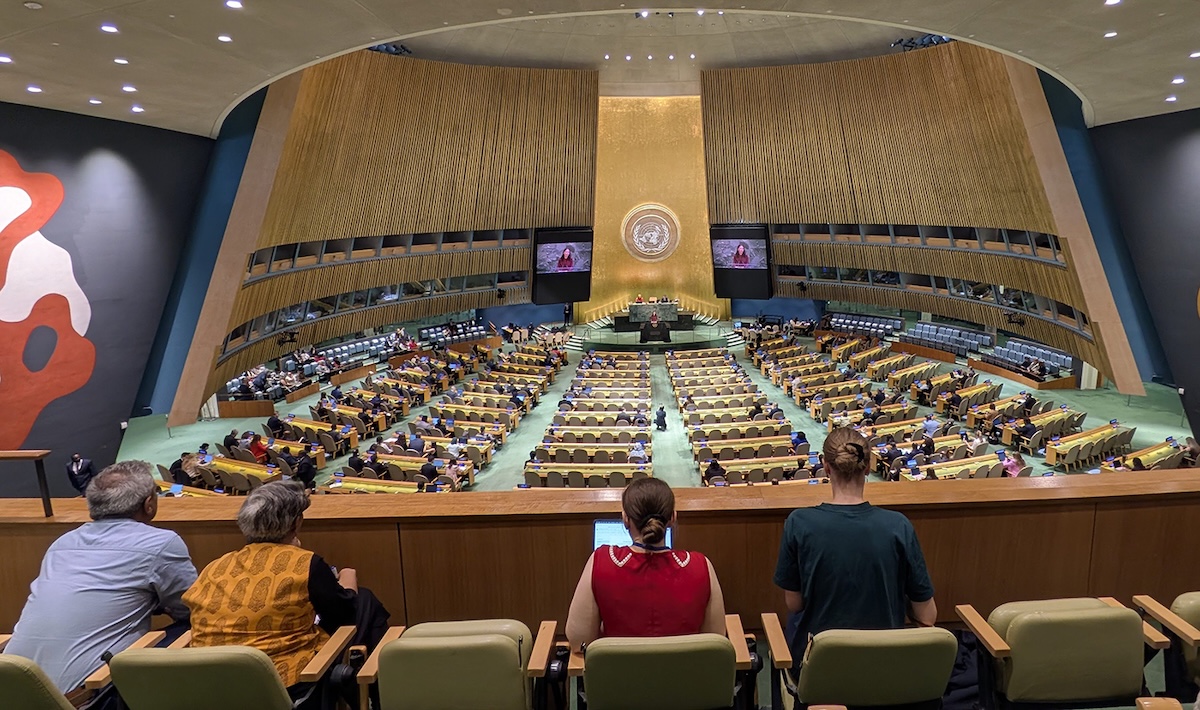
For nearly 15 years, I’ve been attending United Nations High-Level Meetings on AIDS, development, financing, and global health in New York. These are the big gatherings where presidents, ministers, and diplomats come together to make commitments on major global problems. One thing has not changed much: Civil society is invited to the table, but it’s effectively the kids’ table somewhere toward the back of the dining room.
By civil society, I mean nonprofits, community organizations, advocates, and others who often work directly with the people affected by the issues being debated.
Nominally, we are part of the process at the high-level meetings. In practice, the real decisions are worked out by governments, often behind closed doors.
Civil society can submit recommendations and sometimes speak from the floor. The big-name organizations are often selected in advance. Everyone else waits until governments have finished speaking and then jockey for whatever time remains. Sometimes there isn’t any.
Just getting to the U.N. High-Level Meetings can feel like an accomplishment. Registration is a bureaucratic labyrinth, and the process seems to change every year.
Then there is New York. During U.N. High-Level Week, a Manhattan hotel room can easily run $350 to $500 a night for something roughly the size of a shoebox. Spend more and you may even get enough floor space to fully open your suitcase.
That matters because many community organizations, who work on the frontlines of the problems being discussed and have invaluable information to share, have the least money to participate—and can’t afford an expensive hotel room.
At the recent meeting on pandemic preparedness in September, governments broadly agreed that pandemics are dangerous and countries need to prepare together.
But they could not all agree on the final Political Declaration, the document that sets out what governments are actually promising to do. Instead of everyone signing on, some countries formally objected.
That may sound like U.N. procedural trivia. It isn’t. If governments can’t agree on the basic commitments, acting on them becomes even harder.
At a time of global development austerity, why not hold these meetings closer to the communities most affected, where participation is also much cheaper?
If the United Nations genuinely wants to hear from frontline organizations, perhaps it needs to do more than invite them. They must be moved to the proper table.
Denys Nazarov is the Director of Global Policy and Communication at AIDS Healthcare Foundation. He has been with AHF for more than 17 years.